Filter By

Year of publication:

Year of publication:

Publication language:

Publication language:

Active filters

  • Year of publication:: 2012
  • Year of publication:: 2019
  • Year of publication:: 2020
  • Faculty:: Prírodovedecká fakulta
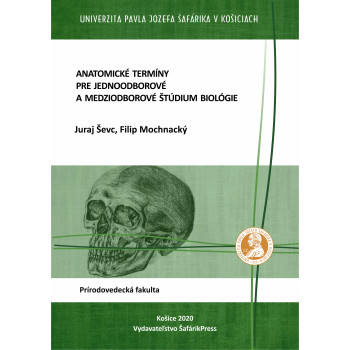
ANATOMICKÉ TERMÍNY PRE JEDNOODBOROVÉ A MEDZIODBOROVÉ ŠTÚDIUM BIOLÓGIE

ANATOMICKÉ TERMÍNY PRE JEDNOODBOROVÉ A...

E-book

E-book

Juraj Ševc - Filip Mochnacký

Students studying biology as the single-subject or as a part of two-subject programs on various faculties of sciences are often encountered with the problem, how to limit the topics in the subject Human anatomy. This List of anatomical terms is aiming to help the non-medical students to get acquainted with the extensive anatomical nomenclature and to optimize the number of anatomical terms, which should be memorized, to preserve the sufficient capacity of the students for another knowledge of the field of systemic, comparative, developmental and functional anatomy. The emphasis on the arrangement of individual anatomical terms into the logical units supports the hierarchical view on the architecture of the human body.

Despite the common opinion, anatomical nomenclature represents a framework, which is during the further study gradually enveloped with the knowledge of more or less related disciplines concerning with the human body and its biological processes. Moreover, besides this ambition, which exceeds the area of the human anatomy, this List of anatomical terms continues the long tradition with respect to the valid Latin and Slovak anatomical terminology.

Download the e-book for free  (pdf)

Book of Abstracts - Conference 70 Years of Botanical Garden of Pavol Jozef Šafárik University

Book of Abstracts - Conference 70 Years of...

E-book

E-book

Lenka Mártonfiová - Martin Suvák - Pavol Mártonfi (eds.)

Conference 70 Years of the Botanical Garden of Pavol Jozef Šafárik University. Slovakia, Košice 3. – 4. September 2020

The book of abstracts from the conference with international participation includes 38 abstracts from a total of 76 authors from various botanical institutions from Slovakia, the Czech Republic, Germany, Poland, Ukraine and the United Kingdom.

It presents an overview of knowledge and experience from the history and the present of botanical research and nature conservation. In addition to botany and nature conservation, the abstracts also cover the field of plant physiology, production of secondary metabolites, environmental studies, management of protected areas, bioinformatics and other topical research problems. The main paper is dedicated to the 70th anniversary of the UPJŠ Botanical Garden, its history and the present and was prepared by the director of the UPJŠ Botanical Garden. It is completed by the papers from the staff of this botanical garden devoted to the current state of research and educational activities in the botanical garden.

Download the e-book for free  (pdf)

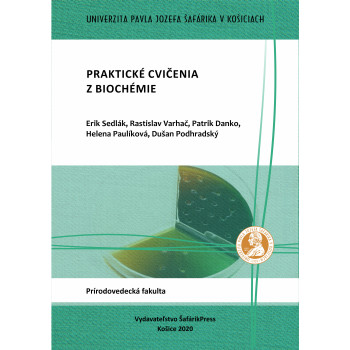
Praktické cvičenia z biochémie

Praktické cvičenia z biochémie

E-book

E-book

Erik Sedlák - Rastislav Varhač -  Patrik Danko - Helena Paulíková - Dušan Podhradský

The presented scripts were created in an effort to update and especially clarify the tasks that are solved in the basic practical exercises in biochemistry students of the 2nd and 3rd year of the bachelor's degree in chemistry, biology and their combinations with other disciplines. Most of the tasks come from the original scripts "Podhradský, Mihalovová: Praktické cvičenia z biochémie, Košice 1989".

Some of them have been modified to a greater or lesser extent and adapted to current conditions in the laboratory. New tasks were also added, such as those dedicated to nucleic acids. The scripts are thematically divided into six separate units, each of which consists of several tasks. The names of the units correspond to the nature of the biomacromolecules, which form their central theme. Theoretical introductions at the beginning of the unit are newly constructed and their main goal is to provide a brief overview of the basic biochemical methods used in the study of biomacromolecules.

These scripts are intentionally only available in electronic form. The reason is the effort to continuously update and modernize individual tasks according to the changing possibilities of our laboratory. We hope that the scripts will fulfill their role and that students will have sufficient theoretical knowledge and practical skills in the field of basic biochemical methods after completing these laboratory exercises.

Download e-book for free (pdf)

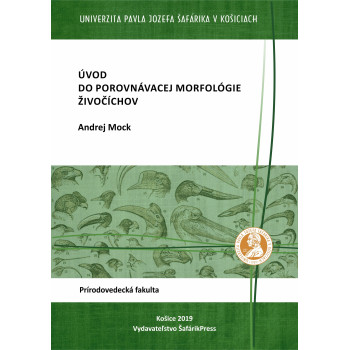
Úvod do porovnávacej morfológie živočíchov

Úvod do porovnávacej morfológie živočíchov

E-book

E-book

Andrej Mock

The structure of the animal body is extremely varied. Each species has its distinctive morphological features, which bears as a testimony to long-term development and belonging to the developmental lineage. At the same time, the body has been tested for a long time by natural conditions, resulting in unique adaptations to the environment and life strategy. Despite this admirable variety - which includes both recent and fossil animals and which we have far from mapped – a comparison of body parts brings knowledge we can generalize: the main building principles, and boundaries within which phenotypic diversity is realized.

Comparative animal morphology today uses the latest methodological material and knowledge from other disciplines, from genetics, molecular biology and experimental embryology, through progressive imaging methods (e.g. electron microscopy, computer micro-tomography) and the possibilities of subsequent software processing of image material (measurement, staining, etc.) to the view of physics, chemistry, statics and geometry on the structures (to nanostructures) of the living body. Detailed knowledge of historical and contemporary conditions on Earth is an important interpretative context in the study of animal morphology. Surprisingly, the knowledge accumulated after centuries of research is now rapidly supplemented by new knowledge, and often the traditional knowledge is subsequently reinterpreted. Finally, and no less important, in studying animal (and human) morphology, we learn surprising knowledge about ourselves.

The author of the presented textbook had the ambition in a simplified form to introduce the reader, especially the student of biological studies, into a dynamic and fascinating scientific discipline, as the current comparative animal morphology is.

Stiahnite si e-knihu zadarmo (pdf)

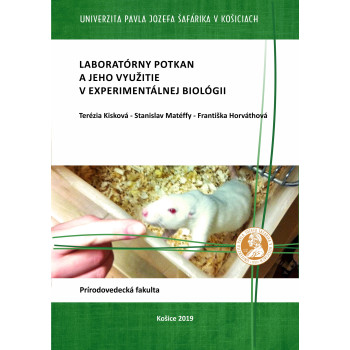
Laboratórny potkan a jeho využitie v experimentálnej biológii

Laboratórny potkan a jeho využitie v...

E-book

E-book

Terézia Kisková - Stanislav Matéffy - Františka Horváthová

The laboratory rat (Rattus norvegicus) is one of the most commonly used experimental animals. It serves as a model organism for analyzing numerous biological processes and pathological mechanisms, such as cardiovascular diseases, metabolic disorders (e.g., lipid metabolism, diabetes mellitus), neurological and neuropsychiatric conditions (e.g., stroke, epilepsy, or Alzheimer's disease), neurobehavioral research, autoimmune diseases (e.g., arthritis), cancer, and renal diseases. It offers many unique advantages for modeling human diseases, testing drugs and natural substances, and studying responses to environmental factors. The size of the laboratory rat, compared to the mouse, creates ideal conditions for physiological manipulations. Additionally, rats are used in clinical toxicology to test chemical substances (Hedrich, 2000).

Download the e-book for free (pdf)

Študentská vedecká konferencia PF UPJŠ 2019

Študentská vedecká konferencia PF UPJŠ 2019

E-book

E-book

Katarína Cechlárová (ed.)

This year, the Student Scientific Conference was held on April 24, 2019, across 17 sections in disciplines such as biology and ecology, chemistry, physics, geography, mathematics, informatics, and their didactics. Bachelor’s and master’s students presented a total of 124 contributions. The most successful participants advanced to national or traditional Czech-Slovak student scientific showcases in fields like physics, chemistry, mathematics, informatics, and mathematics didactics.

In addition to faculty students, 10 high school students participated outside the competition. They were invited based on their achievements in subject-specific Olympiads or because they were already engaged with the faculty under the guidance of dedicated teachers in laboratory work as part of their preparation for future studies. The day also featured a programming competition with 23 participants, an IHRA contest involving 16 teams of high school students and 15 teams from elementary schools, and a new Puzzle section where 72 high school students from the region competed.

The abstracts from the Student Scientific Conference demonstrate that our faculty's students not only absorb theoretical knowledge delivered in lectures but also actively engage in solving partial scientific problems that align with research objectives at the institutes of PF UPJŠ. This collection serves as both a record of scientific activity at the faculty and a dignified presentation for the broader public.

Prof. RNDr. Katarína Cechlárová, DrSc.

Vice-Dean for Education

Doc. RNDr. Gabriel Semanišin, PhD.

Dean of the Faculty

Download the e-book for free  (pdf)

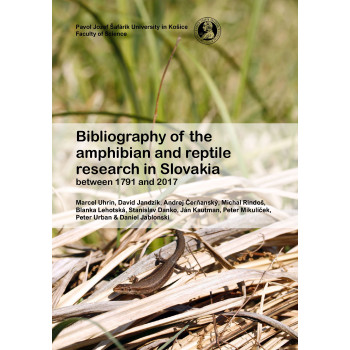
Bibliography of the amphibian and reptile research in Slovakia between 1791 and 2017

Bibliography of the amphibian and reptile...

E-book

E-book

Marcel Uhrin - David Jandzik - Andrej Čerňanský - Michal Rindoš - Blanka Lehotská - Stanislav Danko - Ján Kautman - Peter Mikulíček - Peter Urban - Daniel Jablonski

Bibliographies provide basic scientific information, illustrate quality and intensity of research in a particular topic, area, or time, and thus help build a cultural-historical perspective of society’s appreciation of knowledge and education. Here we provide a bibliography of herpetological research in the region of Slovakia between the years 1791 and 2017. We collected 2,183 references authored by 1,453 different authors and covering all species of amphibians (18) and reptiles (13) occurring in Slovakia and, in addition, amphibian and reptile taxa occurring in 94 other countries.

Most of the contributions were published in popular magazines and non-indexed journals, while only about 12% of all references represent scientific articles from journals indexed in relevant scientific databases. The extensiveness of study on amphibians and reptiles has varied among different periods within the selected time frame. However, an obvious intensification in the field of herpetology can be observed, especially during the second half of the 20th century. While there have only been few professionals specialized in herpetology, an important role in promoting the research and conservation of amphibians and reptiles in Slovakia has been played by non-governmental organizations and hobbyists. The most frequent type of herpetological data in the referenced literature comes from faunistic research, followed by conservation and general information on herpetofauna, with the majority of published articles in indexed journals coming from the fields of palaeontology, phylogeography, and population genetics.

The presented bibliography is the first step towards building a solid base for future systematic herpetological research in the country and Central Europe.

Download the e-book for free (pdf)

Vybrané experimentálne úlohy z koloidiky

Vybrané experimentálne úlohy z koloidiky

E-book

E-book

Daniela Kladeková

This university text is intended for students of chemical and ecological sciences at the Faculty of Natural Sciences of the P. J. Šafárik University in Košice and is intended to serve as a tool for experimental exercises in colloid chemistry. Colloid chemistry is an important part of the theoretical basis of the chemical sciences and belongs to the newer interdisciplinary fields of natural sciences.

It combines knowledge from physical chemistry, physics and biology, while also drawing on a solid knowledge of mathematics and other scientific disciplines. Experiments are often essential in understanding the problems of colloid chemistry, modelling ideas about the phenomena and laws involved in the discipline. This is why active participation in experimental exercises is so important and essential to mastering the material in colloid chemistry.

In selecting the tasks for these scripts, it was also necessary to respect the considerable limitations imposed by the possibilities of the laboratory instrumentation and material equipment of our department. Despite this limitation, however, they can illustrate to students the basic theoretical physicochemical principles of colloid dispersion systems and, importantly, their understanding can contribute to the understanding of some of the more important peculiarities of colloidal phenomena.

Download the e-book for free (pdf)

Matematická analýza 1

Matematická analýza 1

E-book

E-book

Božena Mihalíková - Ján Ohriska

This text is intended for first-year students in 76-12-8 ‘General Education Teaching’ in combinations with mathematics. It is based on the authors' lectures and their more than ten years of experience in teaching this subject at the Faculty of Education of the University of Applied Sciences. When writing it, the authors tried to take into account the specificity of mathematics teaching studies.

The present teaching text was not written due to the lack of textbooks on mathematical analysis. The reason for writing it was the authors' findings that the students do not have sufficient experience in working with specialized literature from secondary school, the difficulties for many of them (especially in the first semesters) are caused by even a slightly different interpretation, not rarely also by a change in labeling, which makes them miss the essence of the studied problem. The authors of the text did not set out to be original. Their aim was to make such a selection of topics as is necessary for a future teacher of mathematics and to choose such a method of interpretation which, in their opinion, is suitable for first-year students.

A good mastery of the curriculum (expansion of the mathematical apparatus and the related possibilities of applying other methods of proof as well as the acquisition of the necessary numerical skills) presupposes the use of other literary sources (textbooks, collections of problems) according to the teacher's recommendation.

Download the e-book for free (pdf)

Príjem a transport minerálnych látok v rastlinách

Príjem a transport minerálnych látok v rastlinách

E-book

E-book

Peter Paľove-Balang

The text ‘Uptake and transport of mineral substances in plants’ in Slovak language provides a general overview of the uptake and distribution of substances in an easy-to-understand form.

The individual chapters introduce students to the properties of the soil environment, which have a significant influence on the availability of substances, as well as the transport of substances across membranes and over medium and long distances. The text contains the latest findings from the English literature, supplemented by diagrams and graphs created by the author on the basis of his own research or by compiling several sources.

The text is intended primarily for students of a master's degree in biology or ecology and assumes at least a basic knowledge of plant physiology.

Download the e-book for free (pdf)

Stresová fyziológia rastlín - Návody na cvičenia

Stresová fyziológia rastlín - Návody na cvičenia

E-book

E-book

Jozef Kováčik

These "Exercise Manuals" present a concise overview of commonly used methodologies as well as progressive techniques, such as the use of liquid chromatography and fluorescence microscopy. Individual tasks were selected based on the research focus of the Department of Botany at the Faculty of Science, Pavol Jozef Šafárik University in Košice, particularly in the context of "stress physiology."

Some tasks can also be utilized within the subject "Plant Ecology." Chamomile (Matricaria chamomilla) is typically used as a model plant for individual tasks due to its long-standing history of research at the Department of Botany and its ease of cultivation under laboratory conditions. The chapters also briefly discuss the significance of monitored parameters, principles of their determination, and metabolism (formation or degradation), aiming to indicate their mutual context.

This approach highlights that determining an individual parameter cannot provide a general explanation for the overall causes and impacts of observed changes; however, it can serve as a basis for testing hypotheses at the level of other parameters.

For deeper study of specific issues, there is an abundance of high-quality international monographs and review articles available.

Download the e-book for free (pdf)

This website uses cookies to ensure you get the best experience on our website