Filter By

Categories

Categories

Year of publication:

Year of publication:

Publication language:

Publication language:

Faculty:

Faculty:

Active filters

  • Categories: Law
  • Publication language:: Slovak
  • Faculty:: Faculty of Arts
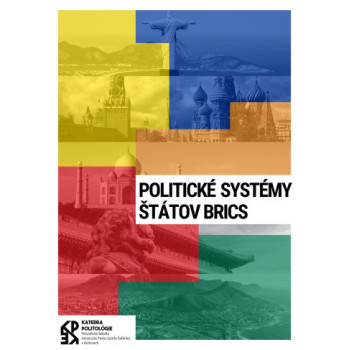
Politické systémy štátov BRICS

Politické systémy štátov BRICS

E-book

E-book

Patrik Furik Michaela RužičkováDávid GajdoščíkPeter DubócziBarbora LinhartováLucia Grieger

The textbook entitled Political Systems of the BRICS States is published as an output of the KEGA 014UPJŠ-4/2020 Innovative Model of Education Leading to Active Citizenship as a Prevention of the Rise of Political Extremism among Students. The aim of the given publication is to present the basic principles of the political systems of the BRICS bloc states and to provide the reader with the nature and character of the bloc's functioning.

The textbook consists of an introduction and five further chapters. All sections are written in Slovak. The individual chapters focus primarily on characterizing the historical development of the BRICS states, the evolution of their constitutionalism, public administration, and on defining the legislative, executive, and judicial branches of power

The individual chapters describe the political systems of the states: Brazil, the Russian Federation, India, China, and South Africa. The introductory chapter of the textbook contains the characteristics of the development and formation of the bloc, as well as information on the cooperation among the BRICS members.

Download the e-book for free (pdf)

Slovensko - Európa - Svet

Slovensko - Európa - Svet

E-book

E-book

Tomáš DvorskýLucia LaczkóKatarína Lörincová (eds.)

The collection of articles from the VIII. International Scientific Conference for Students and Young Scientists, organized by the Department of Political Science of the Faculty of Arts of the Pavol Jozef Šafárik University in Košice, in cooperation with the Res Publica Civic Association the Faculty of Social Sciences of the University of Saints Cyril and Methodius in Trnava, held on 16 May 2019 in Košice.

The aim of this publication, entitled Slovakia-Europe-World, is to point out a complex of diverse topics that are actual in the world, in Europe and in the Slovak republic.

The publication consists of 15 articles, which are primarily written in Slovak. The individual contributions deal with selected topics and aspects of national and foreign policy.

The topics of the articles are human rights, freedom of expression, the rise of religiously motivated nationalism, the issue of unemployment, parliamentary elections and election research. The publication also contains contributions focused on topics in the field of environmental policy, cultural policy or migration policy.

Download the e-book for free  (pdf)

Zákon o národnostiach a Rada vlády Slovenskej socialistickej republiky pre národnosti (predstavy a realita)

Zákon o národnostiach a Rada vlády Slovenskej...

E-book

E-book

Jana Šutajová

From January 1, 1969, the Constitutional Act on the Status of Nationalities in the Czechoslovak Socialist Republic (ČSSR) and the Constitutional Act on the Federation came into effect. The Constitutional Act on the Status of Nationalities represented at least a formal significant step forward in the legal regulation of minority rights. However, this law was intended to serve as a foundation for further legal adjustments. It was declared that additional steps and negotiations for the adoption of implementing regulations would follow and that further laws would be enacted at both the federal and national levels. Nevertheless, no additional law or government regulation related to the constitutional act on the status of nationalities in the ČSSR was ever issued.

During the normalization period, issues concerning further legislation related to national minorities were not addressed. However, in the brief period following the adoption of the constitutional act in 1968 until the end of 1969, some institutions attempted to prepare and promote such legal norms. One of these institutions was the Government Council of the Slovak Socialist Republic (SSR) for Nationalities (hereafter referred to as the Council or the Government Council for Nationalities). The monograph provides an insight into the development of additional legal norms arising from the constitutional act on the status of nationalities in the Slovak Socialist Republic, prepared by the Government Council of SSR for Nationalities. This council was one of the institutions established in Slovakia after the formation of the Czechoslovak federation and dealt with nationality issues.

In addressing further legal norms stemming from the constitutional act on nationalities in ČSSR, it was necessary to consider prior developments. Therefore, the first part of the monograph examines the status of minorities in Czechoslovakia before adopting the constitutional act, activities of nationalities preceding its adoption, and its enactment itself. Subsequent sections focus on institutional changes in SSR following federalization, the establishment of the Government Council of SSR for Nationalities, and specific actions taken by this Council and its expert bodies in drafting proposals for laws concerning nationalities in the Slovak Socialist Republic.

The motivation for writing this monograph stemmed from the fact that this topic has so far received attention only in a few studies in Slovakia, which primarily focused on the Hungarian minority during either the Prague Spring or normalization periods.

Download the e-book for free (pdf)

Probácia v systéme trestnej politiky a sociálnej práce

Probácia v systéme trestnej politiky a...

E-book

E-book

Vladimír LichnerDušan Šlosár

Issues of punishment are directly linked to a state’s criminal policy, which is an inseparable part of its social policy. Historically, the state has held a unique dominant position in the realm of punishment. Once the conditions for imposing a penalty are met, the state fulfills its obligation by sentencing through independent courts. However, it does not address questions of satisfaction, which belong to the victim. The victim may be a specific physical person or legal entity that suffered harm due to the criminal act. This harm simultaneously affects civil society as a whole. The state prioritizes its duty to punish and decide on the matter over compensating the harmed individual or civil society.

By mediation in criminal cases, we mean extrajudicial facilitation of resolving disputes between the offender and the harmed party, with the assistance and personal participation of a mediator. The mediator, as an independent and impartial person, helps parties identify their interests and supports them in finding shared, practical, and realistic solutions to the points causing their conflict. Probation refers to monitoring, supervising the accused, defendant, or convicted individual, as well as providing individual assistance to the offender and encouraging them to lead a lawful life. This reduces the risk of recidivism, or repeated criminal behavior.

Download the e-book for free (pdf)

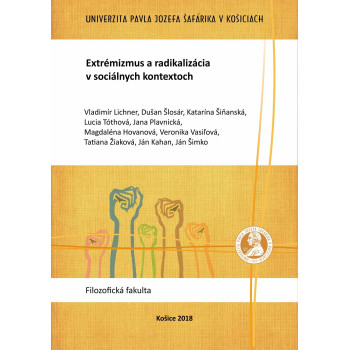
Extrémizmus a radikalizácia v sociálnych kontextoch

Extrémizmus a radikalizácia v sociálnych...

E-book

E-book

Vladimír LichnerDušan Šlosár et al.

It is very difficult to refer to any act of extremism or action having extremist characteristics, or to exclude it unambiguously. The boundary between extremism and accepted, conformal behavior is very broad and vaguely worded. Each company tends to set certain criteria to determine what can be considered as unwanted, violent, radical or extreme, or what signs of such a manifestation do not have. Therefore, when comparing the individual countries of the European Union in this area, we come across a different definition of what is or is not considered to be radical or extremist. In essence, the level of tolerance to some of the manifestations and the setting of indicators for the evaluation of the proceedings as extremist.

The presented monograph aims to present the basic social contexts of extremism and radicalization in the form of their philosophical and theoretical backgrounds, influencing the factors, the basic directions. In the author's work, the authors focus on the target group of adolescents, which they consider to be one of the most endangered groups in society in terms of development of the radicalization process. At the conclusion of the monograph is also offered the criminal level of these phenomena, which is not unavoidable in terms of complex analysis.

Download the e-book for free  (pdf)

This website uses cookies to ensure you get the best experience on our website