Filter By

Categories

Categories

Selections

Selections

Year of publication:

Year of publication:

Publication language:

Publication language:

Faculty:

Faculty:

Active filters

  • Categories: E-books
  • Faculty:: Faculty of Medicine
  • Faculty:: Rektorát
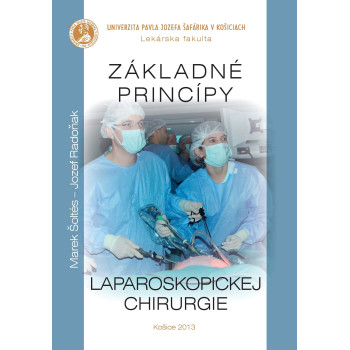
Základné princípy laparoskopickej chirurgie

Základné princípy laparoskopickej chirurgie

E-book

E-book

Marek Šoltés - Jozef Radoňak

Laparoscopic surgery today represents the standard and, in many respects, a preferred modality of surgical treatment. The dynamics of its global expansion, enabled by advancements in biomedical technologies and the development of global information and communication channels, is unprecedented in the history of surgery. Currently, there is virtually no abdominal operation that is not performed laparoscopically, with laparoscopic procedures often being the method of choice.

Despite—or perhaps because of—the unprecedentedly rapid penetration of laparoscopic surgeries into everyday surgical practice, universally accepted technical standards are still lacking in many respects. The high variability of procedural approaches within individual laparoscopic operations stems more from the traditions of specific workplaces than from evidence-based medicine. This situation is further influenced by the development of new and revived concepts such as mini-laparoscopy, SILS (Single Incision Laparoscopic Surgery), NOTES (Natural Orifice Transluminal Endoscopic Surgery), and their hybrid combinations with classical laparoscopy.

The aim of this monograph is to draw the attention of the professional community back to the fundamental principles of laparoscopic surgery, which should serve as a foundation for the effective and safe performance of laparoscopic operations, as well as a basis for a critical stance towards fashionable innovative trends.
Download the e-book for free (pdf)

Psychológia zdravia • Psychológia zdravia v multidisciplinárnom pohľade na zdravie

Psychológia zdravia • Psychológia zdravia v...

E-book

E-book

Zuzana Dankulincová (ed.)

Proceedings from the 8th Nationwide Conference on Health Psychology with International Participation, May 15, 2013, Košice, Slovak Republic

The Proceedings of Scientific Works Health Psychology in a Multidisciplinary Perspective on Health provides an overview of diverse topics addressed by experts in Slovakia and the Czech Republic, covering a broad scope of the discipline of health psychology.

Download the e-book for free (pdf)

Výskum v medicíne a etika

Výskum v medicíne a etika

E-book

E-book

Iveta Cimbolákováa kol.

The premise “today’s research shapes the healthcare of tomorrow” expresses the importance of medical research and the reason for its pursuit. Scientific research and advances in biomedical sciences, as well as their application in medical practice and in the process of delivering healthcare, nevertheless bring new problems in the area of ethics.

Biomedical research itself requires the precise definition of hypotheses, which are tested both under laboratory conditions and on experimental animals. Although clinical studies on human subjects are expected to benefit individual participants and to advance fundamental biomedical knowledge, they also entail certain risks depending on the nature of the research. These risks must be minimized, and the experiment should be conducted freely while also taking place within specific measures to protect all involved-not only the test subjects, but also the researchers themselves.

The presented publication provides an overview of the general conditions and ethical principles of research involving laboratory animals and human subjects, the issue of professional and ethical assessment of projects, as well as fraud and the publication of results. At present, we are witnessing tremendous progress in molecular biological sciences, which brings ethical dilemmas also in the field of genetics. For this reason, one of the chapters is devoted to the latest findings in this area.

Download the e-book for free (pdf)

Tanatológia a humánna tafonómia - etické a právne aspekty

Tanatológia a humánna tafonómia - etické a...

E-book

E-book

Nikita Bobrova kol.

The concept of medical ethics is interpreted as both applied and professional ethics. As a bioethical discipline, it consists of three normative parts: biogenesis, biotherapy, and thanatology. From an ethical perspective, medicine is part of clinical bioethics; however, at the current stage, “evidence-based ethics” is still lacking.

In the context of standardizing health care, there is an excessive development of certain components of bioethics (such as ethical codes and the concept of patient autonomy), but also a reduction, especially of its clinical component (such as communication, thanatology, euthanasia, dysthanasia, and futile treatment). Current legislative efforts are leading to a reduction in the rights of health care workers, particularly in terms of corporate autonomy.

The fundamental task of medical ethics is the cultivation of medical professionalism, which is defined as the professional alignment of expert, ethical, and legal reasoning, and as a starting point for thinking in terms of values, with reflection on the bioethical space in clinical and professional practice.

Since society declares health as its priority, this priority should positively influence the entire health care system, and its basic idea should be a health care system based on a humanistic ethical paradigm with social and professional application.

Download the e-book for free (pdf)

Etické aspekty komunikácie v medicíne

Etické aspekty komunikácie v medicíne

E-book

E-kniha

Silvia Farkašová Iannaccone a kol.

The history of ethics represents the search for a fundamental principle that would enable a person to distinguish between moral and immoral, good and evil, or right and wrong. The main issues are the motives, methods, and consequences of human actions.

The integrity of the medical profession emphasizes lifelong study and practice according to professional competence, and, last but not least, adherence to ethical principles and standards of medical ethics. Medical ethics and the related communication in the process of providing healthcare are becoming increasingly relevant topics. Communication between doctor and patient itself constitutes a very important part of the diagnostic process and treatment; it significantly contributes to the creation of a mutual relationship and, to a considerable extent, ensures patient cooperation.

The development of various information and network technologies allows for rapid communication even in medicine; however, a kind word and real contact with the patient, with an appropriate choice of verbal and nonverbal communication tools in personal contact, cannot be replaced by modern technology. The present era places demands on certain communication skills of the physician. Another ethical and legal issue is informed consent, which brings the patient’s active participation in the process of providing healthcare.

The presented publication provides basic information about medical ethics, communication in medicine in general, and communication skills in medical practice. Further chapters are devoted to the issue of informed consent, ethics, and the specifics of communication with selected groups of patients. We believe that this publication will clarify for the reader the basic ethical pillars and will be helpful for basic orientation in the issues of medical communication.

Download the e-book for free (pdf)

Environment a jeho etické aspekty

Environment a jeho etické aspekty

E-book

E-book

Tatiana Kimáková a kol.

Ethics, as the science of the proper realization of human potential in various areas of life, also extends into the environment. For understanding the ethical aspects in this field, a thorough knowledge of the individual components of the environment, as well as their impact not only on humans but on all living nature, is very important. Therefore, questions concerning the influence of the environment are increasingly at the forefront of interest from an ethical perspective, also in connection with existing legal norms.

The modern process of civilization is characterized by rapid development of science and technology. However, this development, while raising the standard of living on one hand, also brings negative side effects on the other. The result is the disruption of ecological, biological, and natural life conditions, especially in the areas of industrial centers. The development of individual branches of industry leads to the production of liquid, gaseous, and solid wastes, the emergence of harmful risk factors threatening various components of living nature, including humans. There may be increased bioaccumulation of hazardous chemical elements in organisms, which, through their effects, represent a potential risk also in terms of carcinogenesis and mutagenesis.

For this reason, an important role of society is to create conditions to prevent the release of emissions and to reduce their concentration to the lowest possible, socially and biologically acceptable level. The assessment of the biological effects of harmful substances is based on experimental and epidemiological studies. Knowledge of concentration and duration of exposure is crucial for applying dose-effect relationships and for determining the highest permissible concentrations of pollutants. The health of the population, as a universal value and a primary human right, represents a fundamental economic resource not only for the individual, but also for society as a whole.

Download the e-book for free (pdf)

Ošetrovateľské techniky

Ošetrovateľské techniky

E-book

E-book

Libuša Tirpáková - Mária Sováriová Soósová a kol.

It is expected that nurses and professionals working in healthcare will be able to perform various specialized procedures, or assist with selected procedures, skillfully, confidently, and safely.

The university textbook of Nursing Techniques guides students through the most commonly performed nursing activities, reflecting the latest knowledge from the profession, evidence-based practice, and professional guidelines. A significant aspect of this publication is its emphasis on patient individuality and involvement in the planning and implementation of procedures, as well as the prevention of complications and the consistent performance of nursing interventions in accordance with the latest professional and scientific knowledge.

The textbook is divided into twelve chapters. In the introductory chapters, the authors address the organization of the nursing unit and infection control in healthcare facilities. Further chapters are devoted to patient assessment, especially vital functions, nutritional care, preparation and administration of various forms of medication, collection of biological material, care of urinary and bowel elimination, nurse assistance during punctures, wound care, and electrocardiographic examination.

The main aim is to address primarily nursing students, but also students of general and dental medicine and selected healthcare disciplines. We believe that both students and professionals will find in this textbook a guide and a practical assistant.

Download the e-book for free (pdf)

Roma Health Organizations Database

Roma Health Organizations Database

E-book

E-book

Kvetoslava Rimárová

This document is a part of the EU-funded project MEHO - Migrant and Ethnic Health Observatory and Slovak grant VEGA 1/4501/09.
This monograph includes a database of organizations dealing with Roma health and community issues and is part of the Interim Report 2007. The published monographs try to enclose all kinds of information about Roma health including organizations on national, international, governmental and non-governmental levels in Europe as well as international organizations such as WHO and UNDP. The views expressed in this monograph are those of the author and do not necessarily represent the views of the EU MEHO Project or Slovak grant VEGA 1/4501/09.
Kvetoslava Rimárová

This website uses cookies to ensure you get the best experience on our website