Filter By

Categories

Categories

Year of publication:

Year of publication:

Publication language:

Publication language:

Faculty:

Faculty:

Method of publication:

Method of publication:

Active filters

  • Year of publication:: 2010
  • Year of publication:: 2012
  • Year of publication:: 2025
  • Year of publication:: 2025
  • Faculty:: Prírodovedecká fakulta
Stresová fyziológia rastlín - Návody na cvičenia

Stresová fyziológia rastlín - Návody na cvičenia

E-book

E-book

Jozef Kováčik

These "Exercise Manuals" present a concise overview of commonly used methodologies as well as progressive techniques, such as the use of liquid chromatography and fluorescence microscopy. Individual tasks were selected based on the research focus of the Department of Botany at the Faculty of Science, Pavol Jozef Šafárik University in Košice, particularly in the context of "stress physiology."

Some tasks can also be utilized within the subject "Plant Ecology." Chamomile (Matricaria chamomilla) is typically used as a model plant for individual tasks due to its long-standing history of research at the Department of Botany and its ease of cultivation under laboratory conditions. The chapters also briefly discuss the significance of monitored parameters, principles of their determination, and metabolism (formation or degradation), aiming to indicate their mutual context.

This approach highlights that determining an individual parameter cannot provide a general explanation for the overall causes and impacts of observed changes; however, it can serve as a basis for testing hypotheses at the level of other parameters.

For deeper study of specific issues, there is an abundance of high-quality international monographs and review articles available.
Download the e-book for free (pdf)

Určitý integrál

Určitý integrál

E-book

E-book

Ondrej Hutník

The concept of the integral is one of the most significant concepts in mathematics as a whole. In its most primitive form, it was already used by the ancient Greeks in the creation of Euclidean geometry. However, it was only after Descartes' work on analytical geometry in 1637 that mathematicians could begin to consider the integral as a subject of analysis. Descartes' work laid the groundwork for the discovery of infinitesimal calculus by Leibniz and Newton around 1665. At that time, a great dispute arose over the priority of this discovery, dividing scholars of Germany and England into two opposing camps, each favoring their own champion. Today, we know that Newton's work on fluxions and fluents was somewhat earlier, but Leibniz's notation and approach have gained more acceptance in the mathematical world, and the symbols ∫ ∫ and d d are still used today. A brief overview of the history of the integral will be presented in Chapter 1.

Today, there is a plethora of scripts, textbooks, and books dedicated to explaining the concept of the integral. Therefore, every potential author faces the initial question of whether to write another text on this topic. Our affirmative answer to this question was driven by the students' request to find the subject matter of a part of the winter semester of the second year presented in a coherent form. The second motivation is a slightly different approach to the topic. If we consider the methods typically used in solving problems and gaining routine with a certain integral, it mainly involves the Newton-Leibniz formula, and often there is little time left to compute the definite (Riemann) integral using its definition. Therefore, we included a discussion of the Newton integral in Chapter 2, which reflects this fact and is directly related to the indefinite integral, whose various calculation methods receive relatively much attention in the previous semester. Only after that, in Chapter 3, do we build the theory of the Riemann integral, present criteria for its existence, classes of integrable functions, basic properties, and finally its relationship with the Newton integral. Questions primarily concerning geometric applications are addressed in Chapter 4, and in the final chapter, we focus on extending the Riemann integral to unbounded functions and unbounded intervals.

Download the e-book for free (pdf)

Geografické poznatky bez hraníc - výber z maďarských a slovenských príspevkov z fyzickej a humánnej geografie.

Geografické poznatky bez hraníc - výber z...

E-book

E-book

Dušan Barabas a kol.

The presented text is the final product of work within the project "Tanuljunk egymástól!/Let’s Learn from Each Other!" The project emerged from long-standing contacts between the staff of the Centre for Regional Studies of the Hungarian Academy of Sciences and the Institute of Geography at the Faculty of Science, Pavol Jozef Šafárik University in Košice, as a natural effort to expand mutual cooperation. The first step was collaboration within Interreg II projects, involving a broad range of institutions from both academic and non-academic environments. This initial attempt was unsuccessful due to administrative errors. Consequently, a project titled HUSK/0801/1.6.1/0003 "Tanuljunk egymástól!/Let’s Learn from Each Other!" was prepared and developed in agreement with the Hungarian side. It was approved and co-financed by the European Regional Development Fund under the Hungary-Slovakia Cross-Border Cooperation Program 2007–2013.

Download the e-book for free (pdf)

Exactly Solvable Models in Statistical Physics

Exactly Solvable Models in Statistical Physics

E-book

E-book

Jozef Strečka

The present textbook deals with exactly solved models and their diverse applications in several branches of physics such as mathematical physics, statistical physics, condensed matter physics and so on. Exactly soluble models are currently considered as an inspiring research field in its own right, which regrettably requires a considerable knowledge of sophisticated mathematics. Accordingly, my primary ambition was to provide an intro- ductory course for undergraduate students that would cover the simplest exactly solved models, whose rigorous solutions are available even after modest calculation. The present textbook should be therefore regarded as an auxiliary graduate-level textbook, which should serve as the student’s guide on this beautiful but surely intricate subject.

Download the e-book for free (pdf)

Pedagogická prax študentov učiteľstva akademických predmetov

Pedagogická prax študentov učiteľstva...

E-book

E-book

Silvia Kontírová a kol.

Pedagogical practice is an organizational form of higher education training for prospective teachers, implemented through mandatory pedagogical practice subjects.

These subjects have an integrative and practical-training character, building upon the theoretical and practical instruction provided to students at the faculty. They are conducted within the scope defined by curricula in the conditions of specialized workplaces (training schools) and under the supervision of qualified professionals (training teachers). Unlike other higher education subjects, pedagogical practice primarily provides students with opportunities for independent creative teaching in real school environments.

The practical activities of students in training schools are characterized as supervised, monitored, and evaluated by designated entities.

Download the e-book for free (pdf)

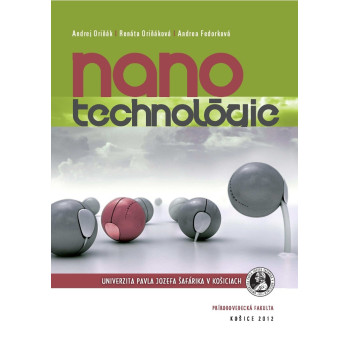
Nanotechnology

Nanotechnology

€17.68
Availability: 58 In Stock

 Andrej Oriňak - Renáta Oriňaková - Andrea Fedorková

Nanotechnology represent the fastest developing science in the present. They are based on the technologies that enable the matter manipulation at atomic level. Nanotechnology offer prepartion of the new materials with unknown and very specific properties and functions.Recent nanotechnology still stay in formative phase of their development. But more and more they are visible with nano-specific phenomenons in the fundamental control of the properties as well mater behaviour. This is quite possible that without nanotechnology will not work any science to the future, moreover that science will not exist anymore. Nanotechnolgy will give a chance and force to transform world to more environmental and comfortable. Expected is expansion of the nanotechnolgy to molecular nanosystems – heterogenous nets, in which molecules and supramolecules work as the nanodevices. The computers and robots will be reduced to the small and ultrasmall dimensions. In medicine will foremost the application of nanotechnology in genetic therapy and elimination of ageing. Nanosurgery will work at molecular level, cancer cells will be identified early and filtered , then substituted with healthy and unchanged. It is necessary to inform university or high school students  about principles of nanotechnolgy, preparation of the nanostructures, functionality of them and to offer full representation about molecular systems and nanodevices; the methods of nanostructures characterization and about application in miniaturized systems. 

Authors

Biochemická terminológia

Biochemická terminológia

€11.60
Availability: 43 In Stock

 Mária KožurkováMartin Putala 

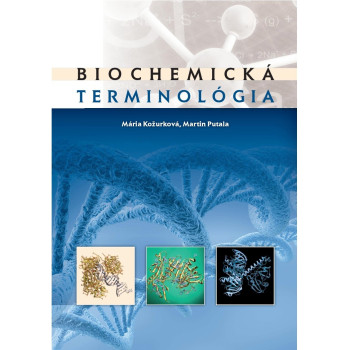
Cieľom tejto knihy je spracovať názvoslovné zásady a pravidlá, podľa ktorých sa tvoria slovenské názvy biochemických zlúčenín. Táto monografia je po dlhšom čase prvým pokusom o spracovanie tohto problému, a preto dúfame, že bude pomôckou a prínosom nielen pre študentov a učiteľov ale aj vedeckých pracovníkov. Poslúži aj študentom stredných škôl, ktorí majú záujem o biochémiu a molekulovú biológiu. Kniha obsahuje najnovšie názvoslovie, zásady a pravidlá pri tvorbe názvov biochemických zlúčenín. Kniha plne aplikuje odporúčania spoločnej komisie Medzinárodnej únie pre teoretickú a aplikovanú chémiu (IUPAC) a Medzinárodnej únie pre biochémiu a molekulárnu biológiu (IUBMB) so zahrnutím aktuálnych úprav názvoslovia, stereochémie a grafického znázornenia štruktúr podľa IUPAC. 

Autori

This website uses cookies to ensure you get the best experience on our website