Filter By

Categories

Categories

Selections

Selections

Year of publication:

Year of publication:

Publication language:

Publication language:

Faculty:

Faculty:

Method of publication:

Method of publication:

Active filters

  • Year of publication:: 2011
  • Year of publication:: 2012
  • Year of publication:: 2025
  • Year of publication:: 2025
  • Faculty:: Prírodovedecká fakulta
Stresová fyziológia rastlín - Návody na cvičenia

Stresová fyziológia rastlín - Návody na cvičenia

E-book

E-book

Jozef Kováčik

These "Exercise Manuals" present a concise overview of commonly used methodologies as well as progressive techniques, such as the use of liquid chromatography and fluorescence microscopy. Individual tasks were selected based on the research focus of the Department of Botany at the Faculty of Science, Pavol Jozef Šafárik University in Košice, particularly in the context of "stress physiology."

Some tasks can also be utilized within the subject "Plant Ecology." Chamomile (Matricaria chamomilla) is typically used as a model plant for individual tasks due to its long-standing history of research at the Department of Botany and its ease of cultivation under laboratory conditions. The chapters also briefly discuss the significance of monitored parameters, principles of their determination, and metabolism (formation or degradation), aiming to indicate their mutual context.

This approach highlights that determining an individual parameter cannot provide a general explanation for the overall causes and impacts of observed changes; however, it can serve as a basis for testing hypotheses at the level of other parameters.

For deeper study of specific issues, there is an abundance of high-quality international monographs and review articles available.
Download the e-book for free (pdf)

Určitý integrál

Určitý integrál

E-book

E-book

Ondrej Hutník

The concept of the integral is one of the most significant concepts in mathematics as a whole. In its most primitive form, it was already used by the ancient Greeks in the creation of Euclidean geometry. However, it was only after Descartes' work on analytical geometry in 1637 that mathematicians could begin to consider the integral as a subject of analysis. Descartes' work laid the groundwork for the discovery of infinitesimal calculus by Leibniz and Newton around 1665. At that time, a great dispute arose over the priority of this discovery, dividing scholars of Germany and England into two opposing camps, each favoring their own champion. Today, we know that Newton's work on fluxions and fluents was somewhat earlier, but Leibniz's notation and approach have gained more acceptance in the mathematical world, and the symbols ∫ ∫ and d d are still used today. A brief overview of the history of the integral will be presented in Chapter 1.

Today, there is a plethora of scripts, textbooks, and books dedicated to explaining the concept of the integral. Therefore, every potential author faces the initial question of whether to write another text on this topic. Our affirmative answer to this question was driven by the students' request to find the subject matter of a part of the winter semester of the second year presented in a coherent form. The second motivation is a slightly different approach to the topic. If we consider the methods typically used in solving problems and gaining routine with a certain integral, it mainly involves the Newton-Leibniz formula, and often there is little time left to compute the definite (Riemann) integral using its definition. Therefore, we included a discussion of the Newton integral in Chapter 2, which reflects this fact and is directly related to the indefinite integral, whose various calculation methods receive relatively much attention in the previous semester. Only after that, in Chapter 3, do we build the theory of the Riemann integral, present criteria for its existence, classes of integrable functions, basic properties, and finally its relationship with the Newton integral. Questions primarily concerning geometric applications are addressed in Chapter 4, and in the final chapter, we focus on extending the Riemann integral to unbounded functions and unbounded intervals.

Download the e-book for free (pdf)

Cvičenia z biochémie mikroorganizmov

Cvičenia z biochémie mikroorganizmov

E-book

E-book

Mária Kožurková

These university textbooks are intended for first-year master's degree students at the Faculty of Natural Sciences of UPJŠ in Košice. The scope and content of the works included in these scripts are primarily based on time and spatial constraints, taking into account the material demands of the tasks.

The aim of these scripts is to teach students basic microbiological techniques and to show them the importance of microorganisms in everyday life and their crucial role in nature. The exercises are designed to enhance students' technical skills and teach them to work according to safety principles.

The text is divided into 13 parts. Each part begins with an introduction to the theory related to the practice topic. The appendix includes a proposal for the preparation of protocols for individual exercises.

Download the e-book for free (pdf)

Vybrané kapitoly z koloidnej chémie

Vybrané kapitoly z koloidnej chémie

E-book

E-book

Daniela Kladeková

Working with this study text requires adequate knowledge of physical chemistry, physics, and biology, as navigating the presented material becomes challenging without this foundation. A solid grasp of mathematics is essential and aids in understanding colloidal chemistry problems. The textbook, structured into individual chapters, first addresses optical and molecular-kinetic properties after classifying and characterizing disperse systems.

This university-level textbook is primarily intended for students in chemical and ecological disciplines at the Faculty of Science, Pavol Jozef Šafárik University in Košice. It does not aim to exhaustively cover every detail of the subject, as comprehensive treatments are already available in specialized monographs on colloid and macromolecular chemistry, as well as in foundational physical chemistry textbooks.

Download the e-book for free (pdf)

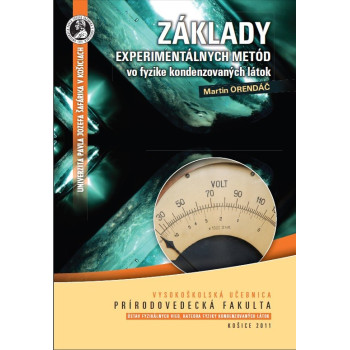
Základy experimentálnych metód vo fyzike kondenzovaných látok

Základy experimentálnych metód vo fyzike...

E-book

E-book

Martin Orendáč

The textbook is designed to prepare students who will engage in the experimental study of the properties of condensed matter. It demonstrates that a contemporary experimental physicist must not only possess sufficiently detailed knowledge of the physical processes occurring within the object under study but also understand the methods for creating the experimental conditions in which the experiment is conducted. Active knowledge of the functioning of the entire experimental setup can be of fundamental importance in the implementation or potential modification of the measurement methodology used.

Download the e-book for free (pdf)

Jadrová chémia

Jadrová chémia

E-book

E-book

Andrea Morovská Turoňová

The discovery of radioactivity at the turn of the 19th and 20th centuries stimulated the rapid development of nuclear sciences. At the interface between nuclear physics and chemistry, disciplines such as radiochemistry, radiation chemistry and nuclear chemistry were formed.

The aim of the Nuclear Chemistry course which is taught at the PF UPJŠ is to provide basic knowledge, with an emphasis on the general value of the subject. It is important to make available the basics of various methods, techniques and their specifics in the application of nuclear phenomena in chemistry and related fields. Emphasis is also placed on the use of correct terminology, knowledge of the context of relationships and basic principles, supplemented by illustrative concrete cases.

The choice of material is rather difficult, but we count on additional monographs and textbooks to fill in the gaps of these teaching texts.

Download the e-book for free (pdf)

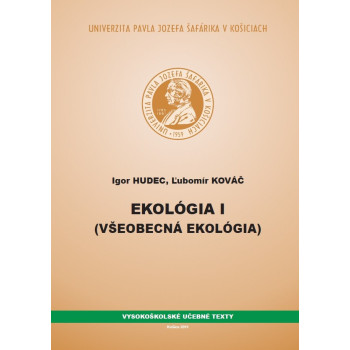
Ecology I (General Ecology)
  • On sale!
  • -€10.35

Ecology I (General Ecology)

€11.35 €1.00 -€10.35
Availability: 70 In Stock

Igor HudecĽubomír Kováč 

The study course provides the basic knowledge on the fundamental parameters, relationships and processes in ecological sciences. Brief content: ecological factors and relations to environment (air, water, soil); influence of ecological factors upon organisms (morphological adaptations, behavioural responses); populations and communities (external and internal parameters of populations, population dynamics); ecosystems (impact assessment) and biomes (basic features and human impact); cycles (hydrologic, gaseous, sedimentation) of basic elements on Earth.  

Authors

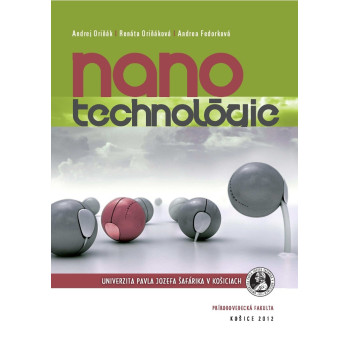
Nanotechnology

Nanotechnology

€17.68
Availability: 58 In Stock

 Andrej Oriňak - Renáta Oriňaková - Andrea Fedorková

Nanotechnology represent the fastest developing science in the present. They are based on the technologies that enable the matter manipulation at atomic level. Nanotechnology offer prepartion of the new materials with unknown and very specific properties and functions.Recent nanotechnology still stay in formative phase of their development. But more and more they are visible with nano-specific phenomenons in the fundamental control of the properties as well mater behaviour. This is quite possible that without nanotechnology will not work any science to the future, moreover that science will not exist anymore. Nanotechnolgy will give a chance and force to transform world to more environmental and comfortable. Expected is expansion of the nanotechnolgy to molecular nanosystems – heterogenous nets, in which molecules and supramolecules work as the nanodevices. The computers and robots will be reduced to the small and ultrasmall dimensions. In medicine will foremost the application of nanotechnology in genetic therapy and elimination of ageing. Nanosurgery will work at molecular level, cancer cells will be identified early and filtered , then substituted with healthy and unchanged. It is necessary to inform university or high school students  about principles of nanotechnolgy, preparation of the nanostructures, functionality of them and to offer full representation about molecular systems and nanodevices; the methods of nanostructures characterization and about application in miniaturized systems. 

Authors

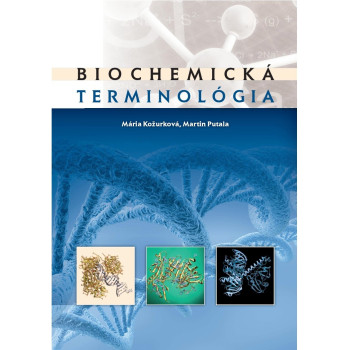
Biochemická terminológia

Biochemická terminológia

€11.60
Availability: 43 In Stock

 Mária KožurkováMartin Putala 

Cieľom tejto knihy je spracovať názvoslovné zásady a pravidlá, podľa ktorých sa tvoria slovenské názvy biochemických zlúčenín. Táto monografia je po dlhšom čase prvým pokusom o spracovanie tohto problému, a preto dúfame, že bude pomôckou a prínosom nielen pre študentov a učiteľov ale aj vedeckých pracovníkov. Poslúži aj študentom stredných škôl, ktorí majú záujem o biochémiu a molekulovú biológiu. Kniha obsahuje najnovšie názvoslovie, zásady a pravidlá pri tvorbe názvov biochemických zlúčenín. Kniha plne aplikuje odporúčania spoločnej komisie Medzinárodnej únie pre teoretickú a aplikovanú chémiu (IUPAC) a Medzinárodnej únie pre biochémiu a molekulárnu biológiu (IUBMB) so zahrnutím aktuálnych úprav názvoslovia, stereochémie a grafického znázornenia štruktúr podľa IUPAC. 

Autori

This website uses cookies to ensure you get the best experience on our website