Filter By

Year of publication:

Year of publication:

Publication language:

Publication language:

Faculty:

Faculty:

Active filters

  • Year of publication:: 2019
  • Year of publication:: 2021
  • Year of publication:: 2022
  • Year of publication:: 2024
  • Year of publication:: 2024
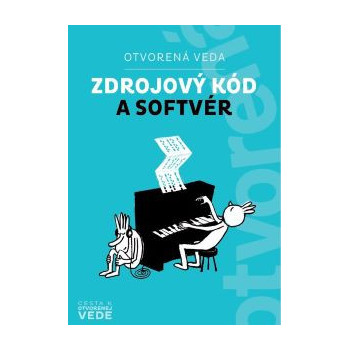
Otvorená veda – Zdrojový kód a softvér

Otvorená veda – Zdrojový kód a softvér

E-book

E-book

Pellegrini François et al.

The guide forms part of the Pathway to Open Science collection by the French Ministry of Higher Education and Research. It addresses the specific challenges related to opening source code and software created and used in scientific research. It provides answers and tools that can be immediately implemented in practice.

You will find here the key to understanding the role of software in the open science ecosystem.

We hope this will encourage you to contribute your work to this effort and the long-term benefit of the academic community.

Download the e-book for free

Automation of Laboratory Experiments in LabVIEW environment

Automation of Laboratory Experiments in LabVIEW...

E-book

E-book

Erik Čižmár

Textbook Automation of Laboratory Experiments in LabVIEW environment is devoted to the basics of graphical programming and shows the way how to communicate with measuring equipment and Arduino development boards in LabVIEW. The basic concepts of creating a virtual instrument and its interactive user environment are introduced. Three physical tasks are presented, the practical implementation of which takes place with the use appropriate instrumentation and LabVIEW. Practical tasks are dedicated to measuring the transmission characteristics of a low-pass RC filter, measuring the natural resonant frequency of a quartz tuning fork using the heterodyne pulse method, and mapping the magnetic field of a permanent magnet using Arduino.

Download the e-book for free (pdf)

Výpočtová a kognitívna neuroveda II (Návody na cvičenia)

Výpočtová a kognitívna neuroveda II (Návody na...

E-book

E-book

Norbert Kopčo

Neuroscience is an interdisciplinary field of science at the interface of biological, psychological and computer sciences, which aims to describe the functioning of the brain and mind. Computational and cognitive neuroscience are subfields of neuroscience focused on the study of information processing in the human and animal nervous systems, and on the theoretical description of the brain and mind. This university textbook contains several assignments that provide an overview of the methods used in computational and cognitive neuroscience, with an emphasis on mathematical modeling and on the behavioral study of cognitive processes. The textbook builds on the author's previous works.

Download e-book for free (pdf)

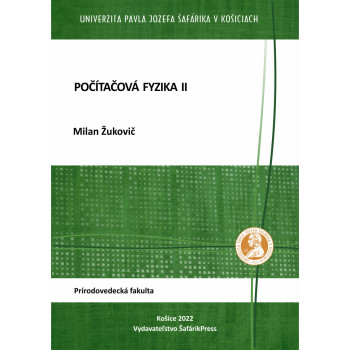
Počítačová fyzika II

Počítačová fyzika II

E-book

E-book

Milan Žukovič

This textbook is intended for master's degree students and is a follow-up to the Computational Physics I course studied at the bachelor's level. The content of the textbook Computational Physics II focuses on stochastic methods of solving physical problems, mainly on Monte Carlo (MC) simulation of many-particle systems.

The focus on this computationally intensive approach is motivated by the gradual increase in the computing capacities of ordinary computers as well as the introduction of high-performance computing clusters. This has led to significant progress in the development of new simulation techniques, thanks to which MC simulations have found application in various areas of research and application practice. Considering the main research focus of the department, this text is particularly devoted to the presentation of basic and more advanced MC simulation techniques applied to a simple Ising spin model in order to investigate its magnetic, thermodynamic and critical properties.

The next part is devoted to MC simulations of random processes. It focuses on the simplest but also the most basic random walk process and demonstrates its applications in financial analysis and the solution of a quantum system described by the time-dependent Schrödinger equation. The last part is dedicated to the basics of molecular dynamics, applied to simulating the classical movement of atoms in a given force field. By mastering the problems addressed in this course, students will obtain a potential tool for working out of their diploma theses, or a methodology useful for their further scientific and research practice in the field of investigating of complex systems.

The lectured topic is subsequently exercised in the form of preparing projects implemented in the freely distributable software Octave, which is easy on the user's programming skills and which students have the opportunity to familiarize themselves with in the previous study.

Download e-book for free (pdf)

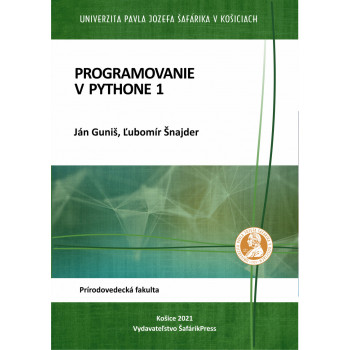
Programovanie v Pythone 1

Programovanie v Pythone 1

E-book

E-book

Ján GunišĽubomír Šnajder

Prílohy

College scripts Programming in Python 1 are intended for future teachers of computer science. The content of the course is related to the teaching of programming in Scratch and is an introduction to text-based programming in Python.

Programming is introduced as a means of developing problem-solving skills. The first chapter is devoted to problem solving. The next 12 chapters sequentially introduce basic language constructions, data structures, and selected types of algorithms. Each of these chapters begins with an introduction to the problem. This section is primarily intended for self-study, to prepare students for the exercises. The following subchapter summarizes and completes the knowledge, and additional insights and approaches related to the chapter topic are presented. The chapters include a collection of exercises designed to practice and deepen knowledge and skills on the topic.

The final part of the chapter presents the solved problems. This section serves as a guide to solving the problems in the collection.

i

Download the e-book for free (pdf)

Študentská vedecká konferencia PF UPJŠ 2019

Študentská vedecká konferencia PF UPJŠ 2019

E-book

E-book

Katarína Cechlárová (ed.)

This year, the Student Scientific Conference was held on April 24, 2019, across 17 sections in disciplines such as biology and ecology, chemistry, physics, geography, mathematics, informatics, and their didactics. Bachelor’s and master’s students presented a total of 124 contributions. The most successful participants advanced to national or traditional Czech-Slovak student scientific showcases in fields like physics, chemistry, mathematics, informatics, and mathematics didactics.

In addition to faculty students, 10 high school students participated outside the competition. They were invited based on their achievements in subject-specific Olympiads or because they were already engaged with the faculty under the guidance of dedicated teachers in laboratory work as part of their preparation for future studies. The day also featured a programming competition with 23 participants, an IHRA contest involving 16 teams of high school students and 15 teams from elementary schools, and a new Puzzle section where 72 high school students from the region competed.

The abstracts from the Student Scientific Conference demonstrate that our faculty's students not only absorb theoretical knowledge delivered in lectures but also actively engage in solving partial scientific problems that align with research objectives at the institutes of PF UPJŠ. This collection serves as both a record of scientific activity at the faculty and a dignified presentation for the broader public.

Prof. RNDr. Katarína Cechlárová, DrSc.

Vice-Dean for Education

Doc. RNDr. Gabriel Semanišin, PhD.

Dean of the Faculty

Download the e-book for free  (pdf)

This website uses cookies to ensure you get the best experience on our website