Filter By

Selections

Selections

Year of publication:

Year of publication:

Active filters

  • Selections: New product
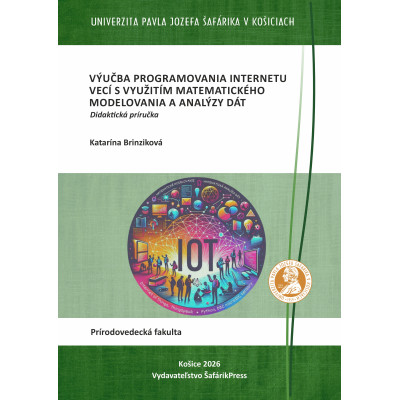
Výučba programovania internetu vecí s využitím matematického modelovania a analýzy dát
  • New

Výučba programovania internetu vecí s využitím...

E-book

E-book

Katarína Brinziková

This teaching guide for instructing students in Internet of Things programming using mathematical modeling and data analysis is intended for mathematics and computer science teachers in elementary and secondary schools, as well as for students training to teach these subjects. It responds to the requirements of the new curriculum reform in Slovakia, which emphasizes a cyclical learning process, the development of data, digital, and mathematical literacy, and the integration of teaching with real-world problems and technologies. The guide is designed in accordance with the methodological framework of design-based research. It contains technological and methodological foundations, as well as a set of proven teaching activities divided into three levels of difficulty. The teaching guide provides teachers with specific instructions, recommendations, and examples of best practices for the meaningful integration of IoT and mathematical modeling into teaching across different educational cycles, creating space for modern, interdisciplinary, and data-driven education.
Download the e-book for free (pdf)

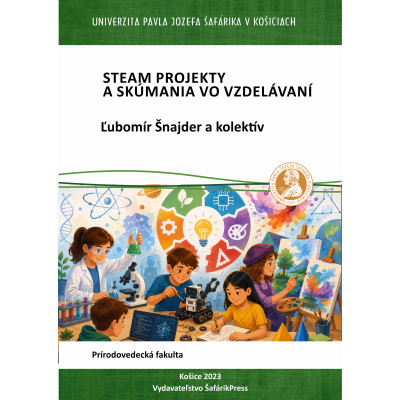
STEAM projekty a skúmania vo vzdelávaní
  • New

STEAM projekty a skúmania vo vzdelávaní

E-book

E-book

Ľubomír Šnajder a kol.

The publication is dedicated to teachers and future teachers of informatics, mathematics and science subjects. The publication presents activities that move students from the role of passive users of digital technologies to that of curious researchers, creative creators and critical thinkers. In the first chapter, we introduce educational strategies and practices to actively engage students in learning. In the second chapter, we briefly describe selected digital technologies that can be an aid to exploring the world around us and creating useful products. In the third chapter, we provide specific ideas for STEAM exploration and projects in which students search answers to real-world questions and solutions to real-world problems. Subject didacticians, experts from different fields and teachers worked closely together to develop ideas for the methodologies.

Download the e-book for free (pdf)

Attachment (zip)

This website uses cookies to ensure you get the best experience on our website