Filter By

Categories

Categories

Year of publication:

Year of publication:

Publication language:

Publication language:

Faculty:

Faculty:

UPJŠ Unit

UPJŠ Unit

Active filters

  • Publication language:: slovenčina
  • Publication language:: slovenčina
  • Publication language:: slovenčina
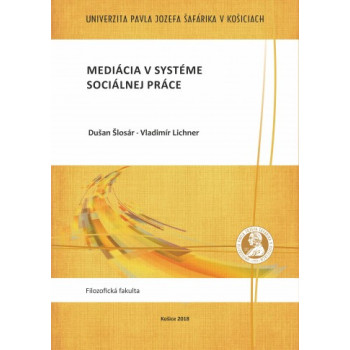
Mediácia v systéme sociálnej práce

Mediácia v systéme sociálnej práce

E-book

E-book

Dušan ŠlosárVladimír Lichner

This university textbook aims to provide readers with knowledge of the philosophical foundations, meaning, and purpose of mediation, based on research and analysis of mediators' activities. In countries where mediation services operate, their staff often include graduates of social work departments.

An individual approach to both the perpetrator and victim of a criminal offense requires knowledge and skills from social work, psychology, sociology, communication, and related fields tied to social work. The principles of social work apply not only in social policy and social care but also in justice. A mediator’s mission is to facilitate alternative resolutions to unlawful acts while preserving the purpose of legal proceedings as defined by valid legal norms. They fulfill this mission through specific methods of individual social work applied in the justice sector. The mediator’s focus extends beyond the current conflict to uncover related issues, activate parties to resolve disputes, and prevent new conflicts.

Special attention is devoted to the philosophical foundations of mediation in Slovakia. We provide an overview of mediators’ core activities and mediation types used to uphold justice in Slovakia. We analyze mediation goals, the roles of parties involved, and procedural steps. In applying mediation, we explore its potential and implementation in both legal and social work contexts.

As indicated, mediation cannot be understood solely as a specialized activity in criminal justice, as it has broader applications in non-judicial dispute resolution, such as family or community work, which are often overlooked by the public. The mediator’s approach to diverse target groups is grounded in theoretical frameworks. From this foundation, we derive activities expected of mediators in the future. Expanded activities arise from concrete situations encountered during mediation.
Download the e-book for free (pdf)

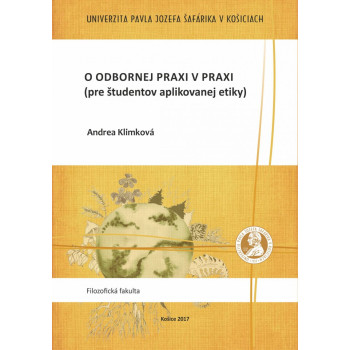
O odbornej praxi v praxi (pre študentov aplikovanej etiky)

O odbornej praxi v praxi (pre študentov...

E-book

E-book

Andrea Klimková

The current development of applied ethics globally suggests that applied ethics is entering a new, qualitatively distinct era of innovative application approaches, methodologies, and methods, as well as novel educational formats. The application levels in applied ethics (in bioethics, business ethics, technology ethics, professional ethics, etc.) are tied to critical reflection on previous strategies and methodologies in their teaching.

Combining ethical rationality with practical variability and implementing ethical policies and tools in concrete practice truly demands new competencies, new skills, and the ability to work in novel ways with empirical and normative frameworks. This requires working with ethical theory and moral practice inventively, heuristically, innovatively, and propedeutically.

The creation of useful and professionally constructed procedures and formats is part of the professional and academic preparation of applied ethicists at modern departments of applied ethics.

Download the e-book for free (pdf)

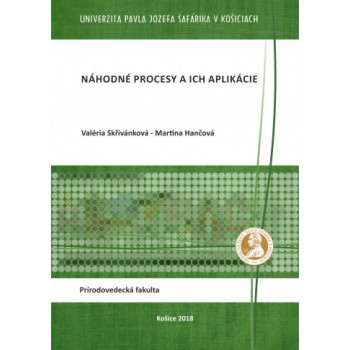
Náhodné procesy a ich aplikácie

Náhodné procesy a ich aplikácie

E-book

E-book

Valéria SkřivánkováMartina Hančová

The publication is focused on discrete random processes, primarily on Markov chains, which have wide application in the field of economics and finance.

The textbook is divided into five chapters, the first of which serves as an introduction to random processes and provides definition, properties and classification of random processes in general. The second chapter discusses Markov chains with discrete time, including valuation of transitions between states and their optimal management. The third chapter focuses on special Markov chains with continuous time and emphasizes construction and solution to the system of Kolmogorov differential equations, which describe the dynamics of the process development. The last two chapters illustrate applications of Markov chains using examples of queuing system modeling and renewal theory.

Besides the explanation of basic terms, definitions and theorems with proofs, this textbook also provides number of solved examples to illustrate the discussed theory. Problem assignments are placed at the end of each chapter, so that readers can test their understanding of the content as they progress through the book. Solutions to all the problems and the list of references are provided at the end of the publication.

This textbook is primarily intented for students majoring in Economics and Financial Mathematics at the Faculty of Science of Pavol Jozef Šafárik University in Košice, and it covers content of the course “Random Proceses 1“ thought there. It might however serve also students from other schools in similar progams or professionals interested in this topic.

Download the e-book for free (pdf)

This website uses cookies to ensure you get the best experience on our website