Filter By

Categories

Categories

Year of publication:

Year of publication:

Publication language:

Publication language:

Faculty:

Faculty:

Active filters

  • Categories: Medicine
  • Faculty:: Prírodovedecká fakulta
Anatomické termíny pre štúdium anatómie človeka a neuroanatómie (2. vydanie)

Anatomické termíny pre štúdium anatómie človeka...

E-book

E-book

Juraj Ševc - Anna Alexovič Matiašová

Among students of single-discipline and interdisciplinary biology studies at faculties with a natural science focus, there often arises a problem in defining the scope of the curriculum when studying the subject of Human Anatomy. The presented study material aims to help students of non-medical scientific fields navigate the extensive anatomical terminology and to limit the amount of required anatomical terms to an optimum, so that alongside mastering Latin nomenclature, students still have sufficient capacity to memorize additional knowledge in the areas of systemic, comparative, developmental, and functional anatomy.

Emphasis on organizing individual anatomical terms into logical units simultaneously supports a hierarchical view of the architecture of the human body. Despite its seemingly self-serving nature, anatomical terminology thus becomes the framework upon which students build knowledge from more or less related scientific disciplines studying the human body and the processes occurring within it throughout their further studies. At the same time, alongside this ambition that goes beyond the scope of the anatomy discipline, the Anatomical Terms follow a long tradition of anatomical handbooks while respecting the valid Latin and Slovak anatomical nomenclature.

This script represents a practical supplement to university textbooks of Anatomy or Neuroanatomy and especially to anatomical atlases, but it certainly does not aim to replace them. Here you will find all the necessary terms gathered in one place, which you can always have at hand on your phone, e-reader, or laptop. The emphasis on organizing individual anatomical terms into logical units supports a hierarchical view of the architecture of the human body, and the inclusion of a brief introduction to each system is intended to encourage you to seek further, more detailed information about the structure and function of the given organ system.
Download the e-book for free (pdf)

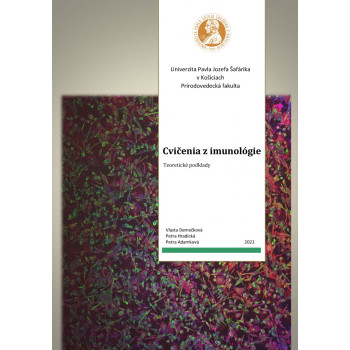
Cvičenia z imunológie

Cvičenia z imunológie

E-book

E-book

Vlasta DemečkováPetra HradickáPetra Adamková

The learning material for the course Practice in Immunology is based on several years of experience with teaching this subject, but mainly to provide students from the Biology Department at the Faculty of Natural Sciences, UPJŠ in Košice with sufficient theoretical background for practical exercises. It also serves as a scientific diary for detailed recording of all experimental data necessary for preparing laboratory protocols from individual exercises.

In studying biology, it is essential that students thoroughly understand not only the basics of each discipline but also acquire practical skills, including designing scientific experiments, selecting appropriate analytical/investigative techniques up to interpreting and presenting experimental data. The goal of this new publication is therefore to provide master's students with a practical study guide that supports and expands their knowledge about basic immunology principles.

Download e-book for free (pdf)

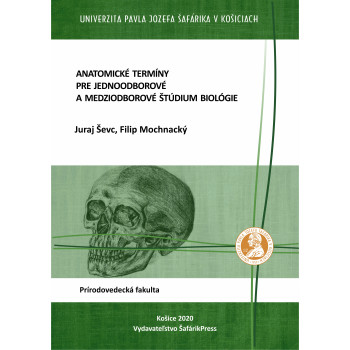
ANATOMICKÉ TERMÍNY PRE JEDNOODBOROVÉ A MEDZIODBOROVÉ ŠTÚDIUM BIOLÓGIE

ANATOMICKÉ TERMÍNY PRE JEDNOODBOROVÉ A...

E-book

E-book

Juraj ŠevcFilip Mochnacký

Students studying biology as the single-subject or as a part of two-subject programs on various faculties of sciences are often encountered with the problem, how to limit the topics in the subject Human anatomy. This List of anatomical terms is aiming to help the non-medical students to get acquainted with the extensive anatomical nomenclature and to optimize the number of anatomical terms, which should be memorized, to preserve the sufficient capacity of the students for another knowledge of the field of systemic, comparative, developmental and functional anatomy. The emphasis on the arrangement of individual anatomical terms into the logical units supports the hierarchical view on the architecture of the human body.

Despite the common opinion, anatomical nomenclature represents a framework, which is during the further study gradually enveloped with the knowledge of more or less related disciplines concerning with the human body and its biological processes. Moreover, besides this ambition, which exceeds the area of the human anatomy, this List of anatomical terms continues the long tradition with respect to the valid Latin and Slovak anatomical terminology.

Download the e-book for free  (pdf)

Laboratórny potkan a jeho využitie v experimentálnej biológii

Laboratórny potkan a jeho využitie v...

E-book

E-book

Terézia KiskováStanislav MatéffyFrantiška Horváthová

The laboratory rat (Rattus norvegicus) is one of the most commonly used experimental animals. It serves as a model organism for analyzing numerous biological processes and pathological mechanisms, such as cardiovascular diseases, metabolic disorders (e.g., lipid metabolism, diabetes mellitus), neurological and neuropsychiatric conditions (e.g., stroke, epilepsy, or Alzheimer's disease), neurobehavioral research, autoimmune diseases (e.g., arthritis), cancer, and renal diseases. It offers many unique advantages for modeling human diseases, testing drugs and natural substances, and studying responses to environmental factors. The size of the laboratory rat, compared to the mouse, creates ideal conditions for physiological manipulations. Additionally, rats are used in clinical toxicology to test chemical substances (Hedrich, 2000).

Download the e-book for free (pdf)

Dietológia a liečebná výživa I.

Dietológia a liečebná výživa I.

E-book

Lucia Dimunová et al.

Nutrition is among the fundamental needs of humans. A good nutritional status directly impacts an individual’s growth and development, health maintenance, and quality of life. This university textbook addresses nutrition in the context of dietetics and therapeutic nutrition, offering an overview of basic food components such as proteins, fats, carbohydrates, vitamins, and minerals.

It provides detailed insights into nutritional requirements across different developmental stages. In assessing nutritional status, it explores evaluation methods, including nutritional screening, anthropometric measurements, clinical assessments, and laboratory tests.

The text clarifies the structure of nutritional care systems for patients in home settings, healthcare facilities, and social institutions through a unified dietary system that defines basic and specialized diets. Alternative nutrition methods are discussed separately, with enteral and parenteral nutrition serving as alternatives during unfavorable health conditions.

The authors focus on application techniques and complications associated with these methods. The book concludes with food safety considerations and foundational principles of the European Union’s food policy. Currently, dietetics and therapeutic nutrition form a critical component of professional training for healthcare students in both undergraduate and postgraduate education, for whom this textbook is designed.

Authors’ Collective

Download the e-book for free  (pdf)

Prehľad dejín biológie, lekárstva a farmácie

Prehľad dejín biológie, lekárstva a farmácie

E-book

E-book

Martin BačkorMiriam Bačkorová

The proposed text focuses on the history of studying biology, medicine, and pharmacy as scientific disciplines from prehistoric times through antiquity, the Middle Ages, and the modern era. The text chronologically organizes the most significant figures in the history of biological scientific disciplines, outlines key characteristics of major historical discoveries, and reevaluates their significance from the perspective of 21st-century science.

The educational text is chronologically divided into the most significant periods of civilization development. The last two completed centuries—the 19th and 20th—are subdivided into major life science fields due to the unprecedented growth of biological disciplines and the resulting volume of acquired information.

Since it can sometimes be challenging in science to define what constitutes the past versus the present of a particular discipline, we have excluded significant biological discoveries from the early 21st century, which are typically regarded as the “present” of biology.

Download the e-book for free (pdf)

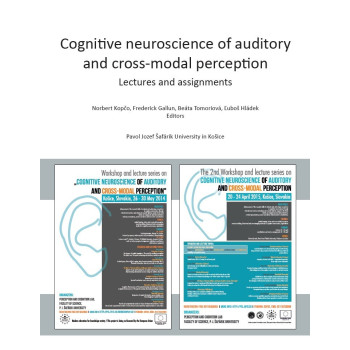
Cognitive neuroscience of auditory and cross-modal perception - Lectures and assignments

Cognitive neuroscience of auditory and...

E-book

Norbert Kopčo - Frederick Gallun - Beáta Tomoriová - Ľuboš Hládek(eds.)

Cognitive neuroscience is a fast developing scientific field which aims at uncovering the neural basis of human perception and cognition. To achieve this goal, cognitive neuroscience uses a variety of tools and approaches ranging from non-invasive brain imaging to psychophysics and neural modeling. Mastering such tools requires skills and knowledge from multiple scientific domains, including neurophysiology, cognitive psychology, and several computational fields.

Access on request via email: kogneuro (@) gmail.com

http://pcl.upjs.sk/workshopcd 

https://sites.google.com/site/kogneuro/

This website uses cookies to ensure you get the best experience on our website