Filter By

Categories

Categories

Year of publication:

Year of publication:

Publication language:

Publication language:

Faculty:

Faculty:

Method of publication:

Method of publication:

Active filters

  • Categories: Medicine
  • Categories: Časopisy a iné periodiká
  • Year of publication:: 2019
  • Year of publication:: 2019
  • Year of publication:: 2019
  • Faculty:: Faculty of Arts
Edukácia, roč. 3, č. 2/2019

Edukácia, roč. 3, č. 2/2019

E-book

E-book

Renáta Orosová (executive editor)

Stránka časopisu >>>

The scientific and professional journal Edukácia focuses on issues of education and upbringing in primary, secondary, and higher education. It emphasizes the current state and future perspectives of educational practice, the latest aspects of pre-service teacher training, social pedagogy, special pedagogy, as well as pedagogical and psychological aspects of upbringing in basic educational institutions from the perspective of the broader pedagogical community. It is intended for researchers, young university lecturers, doctoral students, as well as professional and pedagogical staff, with the aim of presenting trends in education and sparking discussions on current issues in the areas of education and upbringing covered.

Download the e-book for free (pdf)

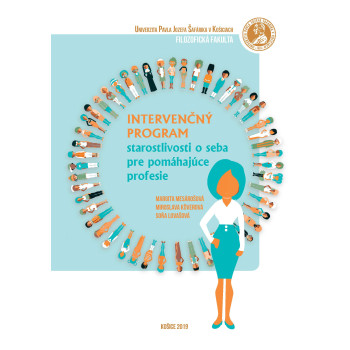
Intervenčný program starostlivosti o seba pre pomáhajúce profesie

Intervenčný program starostlivosti o seba pre...

E-book

E-book

Margita MesárošováMiroslava KöverováSoňa Lovašová

Intervention Program for Supporting Self-Care in Helping Professions: "How Do I Take Care of Myself?" The intervention program "How Do I Take Care of Myself?" was developed as part of the research project APVV14-0921, "Self-Care as a Factor in Coping with the Negative Consequences of Engaging in Helping Professions." Its uniqueness lies in being created based on specific research outputs from the program's authors and project.

In the first chapter, the authors offer insights into the preparation of the intervention program, justifying its theoretical foundations, methods, and specifics of the program participants. They also provide an overview of research on the effectiveness of various intervention programs aimed at reducing the negative consequences of helping and enhancing self-care and other positive effects of engaging in helping professions. Subsequent chapters focus on a detailed analysis and evaluation of the effectiveness of the intervention program "How Do I Take Care of Myself?" and its comparison with the effectiveness of other programs, which were differently focused, targeted at different populations of helping professionals, and had different theoretical and practical orientations and foundations. Most of these studies demonstrated positive changes only in isolated cases, due to various methodological shortcomings often related to practical application.

What differentiates the intervention program presented in this monograph is the participation of helping professionals actively practicing in the social field, unlike most intervention programs compiled and validated for students of these professions. The student population, being more accessible to researchers, allows for better methodology, including a larger number of participants, as well as experimental manipulation and group balancing. In the case of participants in the validation of the program "How Do I Take Care of Myself?", it involved practitioners who are engaged in the daily work process and completed training during their work breaks, which placed high demands on balancing their work and personal tasks. We believe that the effects we discovered during the validation of the effectiveness of the presented intervention program were not always clearly mathematically graspable but were evident from individual feedback.

We present the text of this monograph to the professional public with the aim of highlighting the benefits, limitations of the intervention program, as well as inspiring researchers and practitioners to further work in this area.

Authors

Download the e-book for free (pdf)

Edukácia, roč. 3, č. 1/2019

Edukácia, roč. 3, č. 1/2019

E-book

E-book

Renáta Orosová (executive editor)

Website >>>

The scientific-professional journal Edukácia focuses on issues of education and upbringing in primary, secondary, and higher education. It emphasizes the current state and perspectives of educational practice, current aspects of pre-graduate teacher training, social pedagogy, special education, as well as pedagogical and psychological aspects of education in basic educational institutions from the perspective of the broader pedagogical community. It is intended for researchers, young university teachers, doctoral students, as well as professional and pedagogical staff, with the aim of presenting trends in education and stimulating discussion on current issues in the presented areas of upbringing and education.

Download the e-book for free (pdf)

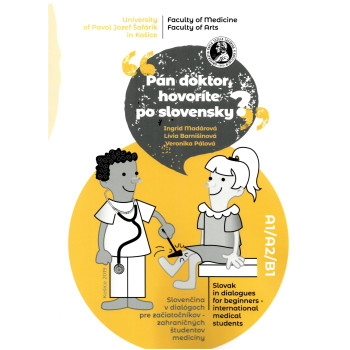
Pán doktor, hovoríte po slovensky?

Pán doktor, hovoríte po slovensky?

€14.00
Availability: 19 In Stock

Ingrid Madárová - Lívia Barnišinová - Veronika Pálová

Táto učebnica je určená pre zahraničných študentov medicíny – začiatočníkov – ako slovenčina na špecifický účel výučby. Jej cieľom je pomôcť zahraničným študentom, ktorí (1) študujú medicínu (2) v cudzom jazyku (anglický jazyk) a (3) v zahraničí (Slovensko) zvládnuť výzvu pri príprave na praktickú časť ich štúdia – konverzácia s pacientom v Slovenskom jazyku.Zámerom je poskytnúť študentom krok za krokom najfrekventovanejšie slovné spojenia a výrazy potrebné pri komunikácii s pacientom. Lekcie sa zameriavajú hlavne na slovnú zásobu týkajúcu sa častí ľudského tela a na základné symptómy a príznaky chorôb.Dôraz je kladený na krátke dialógy medzi lekárom a pacientom. Pri precvičovaní dialógov sú študenti vedení k nácviku komunikácie so zreteľom na porozumenie, bez prípadných obáv o gramatickú správnosť. Gramatické javy sú predstavované postupne, cez jednoduché  pomôcky – „tipy“.V prípade potreby si môžu študenti nájsť a doplniť si „chýbajúce časti gramatiky“ prostredníctvom odkazov na odporúčanú literatúru. Cieľom tejto knihy je uľahčiť a zefektívniť celý proces štúdia/osvojenia si (lekárskej) slovenčiny.

This website uses cookies to ensure you get the best experience on our website