Princípy chirurgie I.
1 - História chirurgie a jej východiská
2 - Chirurgický pacient
3 - Asistované vyšetrenie chirurgického pacienta
4 - Anestézia, reanimácia a výživa
5 - Základné a špecifické chirurgické výkony
There are 11 products.
Active filters
1 - História chirurgie a jej východiská
2 - Chirurgický pacient
3 - Asistované vyšetrenie chirurgického pacienta
4 - Anestézia, reanimácia a výživa
5 - Základné a špecifické chirurgické výkony
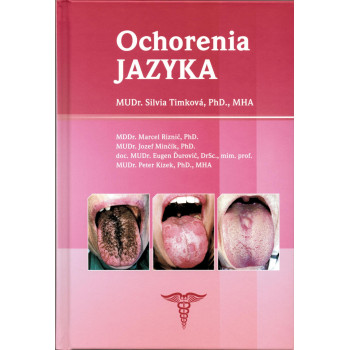
Vyšetrenie jazyka jednou z najstarších vyšetrovacích metód v klinickej praxi. Jazyk je ako súčasť ústnej dutiny dobre prístupný vyšetreniu, čo zvyšuje jeho diagnostický význam. Pohľad na jazyk a posúdenie jeho stavu tvorilo základ umenia celých generácií bývalých lekárov. Diagnostika na základe vyšetrenia jazyka sa spomína v kódexoch čínskej medicíny už 3000 rokov pred n. l. Obdobný prístup presadzoval aj Hippokrates, zakladateľ medicíny ako vedeckého odboru.
Táto monografia komplexne zahŕňa lokálnu patológiu jazyka aj jeho zmeny pri celkových ochoreniach. Kniha je príspevkom ku zvyšovaniu všeobecno-medicínskej úrovne zubných lekárov, no aj kolegov z ďalších medicínskych odborov. Recenzenti odporúčajú monografiu ako vysokoškolský učebný text.
E-book
Iveta Cimbolákováa kol.
The premise “today’s research shapes the healthcare of tomorrow” expresses the importance of medical research and the reason for its pursuit. Scientific research and advances in biomedical sciences, as well as their application in medical practice and in the process of delivering healthcare, nevertheless bring new problems in the area of ethics.
Biomedical research itself requires the precise definition of hypotheses, which are tested both under laboratory conditions and on experimental animals. Although clinical studies on human subjects are expected to benefit individual participants and to advance fundamental biomedical knowledge, they also entail certain risks depending on the nature of the research. These risks must be minimized, and the experiment should be conducted freely while also taking place within specific measures to protect all involved-not only the test subjects, but also the researchers themselves.
The presented publication provides an overview of the general conditions and ethical principles of research involving laboratory animals and human subjects, the issue of professional and ethical assessment of projects, as well as fraud and the publication of results. At present, we are witnessing tremendous progress in molecular biological sciences, which brings ethical dilemmas also in the field of genetics. For this reason, one of the chapters is devoted to the latest findings in this area.
E-book
Nikita Bobrova kol.
The concept of medical ethics is interpreted as both applied and professional ethics. As a bioethical discipline, it consists of three normative parts: biogenesis, biotherapy, and thanatology. From an ethical perspective, medicine is part of clinical bioethics; however, at the current stage, “evidence-based ethics” is still lacking.
In the context of standardizing health care, there is an excessive development of certain components of bioethics (such as ethical codes and the concept of patient autonomy), but also a reduction, especially of its clinical component (such as communication, thanatology, euthanasia, dysthanasia, and futile treatment). Current legislative efforts are leading to a reduction in the rights of health care workers, particularly in terms of corporate autonomy.
The fundamental task of medical ethics is the cultivation of medical professionalism, which is defined as the professional alignment of expert, ethical, and legal reasoning, and as a starting point for thinking in terms of values, with reflection on the bioethical space in clinical and professional practice.
Since society declares health as its priority, this priority should positively influence the entire health care system, and its basic idea should be a health care system based on a humanistic ethical paradigm with social and professional application.
Download the e-book for free (pdf)
E-kniha
Silvia Farkašová Iannaccone a kol.
The history of ethics represents the search for a fundamental principle that would enable a person to distinguish between moral and immoral, good and evil, or right and wrong. The main issues are the motives, methods, and consequences of human actions.
The integrity of the medical profession emphasizes lifelong study and practice according to professional competence, and, last but not least, adherence to ethical principles and standards of medical ethics. Medical ethics and the related communication in the process of providing healthcare are becoming increasingly relevant topics. Communication between doctor and patient itself constitutes a very important part of the diagnostic process and treatment; it significantly contributes to the creation of a mutual relationship and, to a considerable extent, ensures patient cooperation.
The development of various information and network technologies allows for rapid communication even in medicine; however, a kind word and real contact with the patient, with an appropriate choice of verbal and nonverbal communication tools in personal contact, cannot be replaced by modern technology. The present era places demands on certain communication skills of the physician. Another ethical and legal issue is informed consent, which brings the patient’s active participation in the process of providing healthcare.
The presented publication provides basic information about medical ethics, communication in medicine in general, and communication skills in medical practice. Further chapters are devoted to the issue of informed consent, ethics, and the specifics of communication with selected groups of patients. We believe that this publication will clarify for the reader the basic ethical pillars and will be helpful for basic orientation in the issues of medical communication.
E-book
Libuša Tirpáková - Mária Sováriová Soósová a kol.
It is expected that nurses and professionals working in healthcare will be able to perform various specialized procedures, or assist with selected procedures, skillfully, confidently, and safely.
The university textbook of Nursing Techniques guides students through the most commonly performed nursing activities, reflecting the latest knowledge from the profession, evidence-based practice, and professional guidelines. A significant aspect of this publication is its emphasis on patient individuality and involvement in the planning and implementation of procedures, as well as the prevention of complications and the consistent performance of nursing interventions in accordance with the latest professional and scientific knowledge.
The textbook is divided into twelve chapters. In the introductory chapters, the authors address the organization of the nursing unit and infection control in healthcare facilities. Further chapters are devoted to patient assessment, especially vital functions, nutritional care, preparation and administration of various forms of medication, collection of biological material, care of urinary and bowel elimination, nurse assistance during punctures, wound care, and electrocardiographic examination.
The main aim is to address primarily nursing students, but also students of general and dental medicine and selected healthcare disciplines. We believe that both students and professionals will find in this textbook a guide and a practical assistant.
Dušan Hirjak - Vladimír Machoň
Tretie moláre, M3, zuby múdrosti, osmičky, prípadne iné pomenovanie sa používa pre jedinečnú skupinu zubov, ktorá je predmetom odborných diskusií. Predložená odborná monografia sa zaoberá práve touto témou z viacerých pohľadov a má ambíciu podať komplexný pohľad na tento medicínsky problém. Je v prvom rade určená študentom a absolventom medicíny odboru zubné lekárstvo, ale môže byť zaujímavým zdrojom aj pre všeobecných lekárov.
Dušan Dobrota a kol.
Po piatich rokoch sa ku Vám dostáva druhé, prepracované a doplnené vydanie učebnice lekárskej biochémie. Od prvého vydania tejto knihy sa objavili mnohé nové poznatky v rôznych oblastiach experimentálnej a klinickej biochémie, ktoré sme sa usilovali v primeranej miere zapracovať do jednotlivých kapitol. Prax ukázala, že je potrebné rozšíriť učebnicu aspoň o niektoré základné informácie z klinickej biochémie, aby študenti už na začiatku štúdia pochopili možné využitie biochemických poznatkov a princípov v klinickej praxi.
Učebnica je rozdelená na časť venovanú štruktúre a vlastnostiam biomolekúl, časť opisujúcu metabolické procesy a ich regulácie a funkčnú biochémiu vybraných tkanív a orgánov. Pokúsili sme sa tiež redukovať niektoré časti statickej biochémie a doplniť viac dynamické kapitoly, ako sú napríklad biochemické základy uchovávania a prenosu genetickej informácie, regulácie v živých systémoch a biochémia a patobiochémia ústnej dutiny. Rovnako boli doplnené a prepracované niektoré obrázky a schémy, aby lepšie dokumentovali a vysvetľovali text pre čitateľa. Zmenili sme aj formát učebnice.
Veríme, že všetky tieto zmeny prispejú ku zvýšeniu kvality a študenti budú veľmi radi siahať po tejto učebnici, aby získali potrebné vedomosti z lekárskej biochémie nielen pre ďalšie štúdium, ale najmä pre svoju budúcu prax. Kolektív autorov bol vytvorený z popredných odborníkov z biochemických ústavov na Jesseniovej lekárskej fakulte UK v Martine, Lekárskej fakulte UK v Bratislave, Lekárskej fakulte UPJŠ v Košiciach a dvoch pracovísk Slovenskej akadémie vied, a to Ústavu experimentálnej endokrinológie SAV a Ústavu klinického a translačného výskumu, Biomedicínskeho centra SAV. Autori zhrnuli vo vysokoškolskej učebnici lekárskej biochémie doterajšie poznatky z odboru. Jej koncepcia a celkový obsah vychádzajú z dlhoročných pedagogických skúseností autorského kolektívu pri výučbe študentov medicíny.
Naším cieľom bolo, aby táto učebnica slúžila pre štúdium biochémie nielen pre študentov lekárskych fakúlt, ale našla uplatnenie pri výučbe biochémie aj na farmaceutických fakultách, fakultách veterinárneho lekárstva, biomedicíny, ako aj príbuzných biochemických odborov na iných vysokých školách. V neposlednej miere môže byť dobrou pomôckou aj pre absolventov spomenutých fakúlt v rámci doktorandského a špecializačného štúdia. Veríme, že štúdium s použitím tejto bohato ilustrovanej učebnice sa stane pre jej používateľov príjemným zážitkom a biochémia napriek jej rozsahu a komplexnosti obľúbeným predmetom. V Martine 22.6.2016
Praktická postgraduálna príručka s najdôležitejšími poznatkami o aplikácii liečivých rastlín v terapeutickej praxi. Rozoberá farmakodynamiku účinných rastlinných látok pri metabolických poruchách, chorobách tráviacej rúry, pečene, žlčových ciest, obličiek a močových vývodov, ako aj pri srdcovocievnych, ženských, nervových a duševných ochoreniach, rovnako pri postihnutí kožného krytu a pohybovej sústavy. Poukazuje na možnosti fytoprofylaxie, nastoľuje problematiku nežiaducich vedľajších účinkov a intoxikácie pri nevhodnom užívaní rastlinných drog alebo fytofarmák. Publikácia je určená predovšetkým praktickým lekárom pre deti, dorast aj dospelých, internistom, gerontológom, stomatológom, veterinárom, farmaceutom, ale aj poslucháčom lekárskych i farmaceutických fakúlt. Po knihe siahnu aj vzdelaní laici, ktorí chcú poznať odborné stanovisko k užívaniu liečivých rastlín a ich látok. Je to potrebné, pretože súčasný trh je zaplavený množstvom nevedeckých, zavádzajúcich tvrdení a stanovísk v tlači, ale tiež v audiovizuálnych médiách, ktoré fytoterapiu diskreditujú. Publikácia predstavuje 3., rozšírené vydanie predchádzajúcej verzie Fytoterapie, ktoré je doplnené o aplikáciu najnovších výskumov a predstavuje výnimočné dielo z pera lekára – fytoterapeutického odborníka.
Mária Mareková a kol.
Medical biochemistry is integral parts of basic theoretic knowledge of contemporary graduate at medical faculties. This textbook intends to help the undergraduate students of study branches General Medicine and Dental Medicine for the course of “Medical Biochemistry”. It is structured into 10 chapters concerning several topics: enzymology, cells membrane, metabolism, biochemistry of blood and organs, as well as some parts of clinical biochemistry.
The theoretical knowledge of this subject, which student obtains in the lectures, is verified in laboratory practices and is expanded in seminaries. Our selection of topics makes the text especially appropriate for medical students and managing of problems gives the students satisfactory ground for effective study of medical biochemistry and other related study subjects (e.g. clinical biochemistry, physiology, pathophysiology) in the sense of comprehension of relative continuity and interdependence of biochemical process or their function respectively.
Since the textbook brings only the skeleton survey on the biochemical problematic concerning medicine, students should broaden presented facts by additional study from lectures and/or from other sources. We expect this study literature to serve as a basic study material for mentioned medical study branches for preparation to written part of exam from “Medical Biochemistry”.
Authors
Magdaléna Hagovská a kol.
Vysokoškolská učebnica Praktická kinezioterapia je určená fyzioterapeutom v rámci pregraduálneho, ale aj postgraduálneho vzdelávania. Je komplexne prepracovanou, opravenou a rozšírenou publikáciou pôvodného textu skrípt Najčastejšie používané liečebné metodiky pre fyzioterapeutov (Hagovská, Mihalečková, 2012).
Fyzioterapia sa dotýka takmer všetkých základných klinických odborov. Z toho vyplýva, že fyzioterapeuti by mali ovládať základné poznatky o špeciálnych metódach, ktoré sa zaoberajú fyzioterapiou vertebrologických a neurologických pacientov, pacientov s ortopedickým ochorením, s gynekologickými a urologickými problémami, a pacientov s psychosomatickou diagnózou. Väčšina popísaných najznámejších 44 liečebných metód obsahuje obrázkovú prílohu, na základe ktorej študenti dokážu lepšie pochopiť uvádzané techniky a predísť chybnému vykonávaniu jednotlivých techník.
Autori