Filter By

Categories

Categories

Year of publication:

Year of publication:

Publication language:

Publication language:

Faculty:

Faculty:

Method of publication:

Method of publication:

Active filters

  • Categories: Social sciences
  • Year of publication:: 2017
  • Year of publication:: 2017
  • Year of publication:: 2017
  • Year of publication:: 2017
  • Year of publication:: 2017
  • Year of publication:: 2017
  • Year of publication:: 2022
  • Year of publication:: 2022
  • Year of publication:: 2022
  • Year of publication:: 2022
  • Year of publication:: 2022
  • Year of publication:: 2022
  • Year of publication:: 2022
  • Year of publication:: 2022
  • Year of publication:: 2023
  • Year of publication:: 2023
  • Year of publication:: 2023
  • Year of publication:: 2023
  • Year of publication:: 2023
  • Year of publication:: 2023
  • Year of publication:: 2023
  • Year of publication:: 2023
  • Year of publication:: 2023
  • Year of publication:: 2023
Základy školskej psychológie

Základy školskej psychológie

E-book

E-book

Ján Hvozdík

With great interest, I read the proposal for the reissue of the monograph by Prof. PhDr. Ján Hvozdík, DrSc., Základy školskej psychológie (Foundations of School Psychology). It was an honor for me to be part of the editorial board for the new edition of the textbook.

The reissue comes at a time when school psychology seems to be experiencing a renaissance in its application. This is no coincidence, as the professor’s conception of school psychology as a theoretical-applied and integrated psychological discipline strives not only directly but also indirectly, through the pedagogical practice of teachers, to influence specific situations in educational practice within the school environment. From my perspective, I also appreciate the attention given in the textbook to the ever-relevant topic of self-directed learning, that is, the autodidactics of pupils and students. School psychology has become a core subject, within which its specializations are also realized.

It is worth mentioning the fact that, under the conditions of totalitarianism, the professor was not a member of the Communist Party of Czechoslovakia, and yet he made significant contributions to the development of school counseling, both in theory and in practice, which commands respect and admiration. The reissue of the textbook is not an apology but rather a celebration of his positive contributions.

prof. PhDr. Ján Grác, DrSc.

Download the e-book for free (pdf)

Význam a miesto resocializácie a reedukácie v sociálnej práci

Význam a miesto resocializácie a reedukácie v...

E-book

E-book

Eva Žiaková (ed.) 

The 5th edition of the Košice Days of Social Work

Proceedings of the scientific conference with international participation held on November 25, 2016, in Košice

The issue of re-education and resocialization is not new, but it is an increasingly urgent problem as various types of dependencies grow in both scope and content. It can be said that this issue represents one of the central themes of social work in its theoretical foundations as well as practical contexts.

This was the main reason for selecting this topic as the central theme of the 5th edition of the Košice Days of Social Work, which was the sixth continuation of the professional community’s gatherings to address social problems currently troubling our society. The presented proceedings include nearly three dozen contributions from more than twenty authors from Slovakia, as well as Poland and the Czech Republic. The content of the contributions deals not only with theoretical foundations and perspectives on the issue of resocialization and re-education but also with the consequences of these processes in various client social risk groups—whether it involves the addicted, aggressive, chronically ill, convicted, divorced, bullied, cyberbullied, etc.

I believe that such a wide range of contributions will enrich all those who work and study in the theoretical, research, and practical fields of social work.

Download the e-book for free (pdf)

Prvé decénium Filozofickej fakulty Univerzity Pavla Jozefa Šafárika v Košiciach (2007 – 2016)

Prvé decénium Filozofickej fakulty Univerzity...

E-book

E-book

Iveta Bónová - Marián Gladiš (eds.)

The Foundation of the Faculty is a major “thing” created and developed by many personalities. The collected information, opinions, and critical judgements have led me to the conclusion that there exist among us plenty of narratives on the formation of this Faculty.

What is appealing about this fact is that from each party concerned, specifically teachers of Philosophy, Psychology and Education at the UPJŠ Faculty of Science, teachers of Psychology at the UPJŠ Faculty of Public Administration in Košice, teachers of the Department of Foreign Languages at UPJŠ, teachers at Prešov University who were approached with a bid to create the conditions of and opportunities for the development of their study branches at the new UPJŠ Faculty of Arts in Košice, there is a significant clue reflected in the inception of the new Faculty of this University.

It is necessary to say that it is a justifiable reflection, because without this, it would not be possible to develop exploration and offer the students courses in the field of Humanities, in social and behavioural sciences, educational sciences, and in the field of History and Ethnology.

Download the e-book for free (pdf)

Začínajúci učiteľ a školská legislatíva I.

Začínajúci učiteľ a školská legislatíva I.

E-book

E-book

Zuzana Boberová

The aim of this university textbook is primarily to provide a comprehensive and systematic overview of the basic legislative documents related to pedagogical activities and the educational work of teachers in school practice. The textbook is primarily intended for students of academic teacher training programs, as well as recent graduates of teacher education who are beginning their teaching careers.

This publication is unique in that it does not focus on specific legislative documents and their descriptions, but rather presents the meaning and wording of various legislative documents in the context of key concepts of educational activities and typical school situations. The publication does not include the full text of cited paragraphs from laws, decrees, and ministerial guidelines, but only excerpts that are relevant to the focus and needs of the textbook.

In this way, we aim to help teacher training students and beginning teachers orient themselves regarding their rights and responsibilities as defined and delineated by school legislation, and especially to help them understand the basic legislative requirements placed on every teacher in school practice. This includes participation in the preparation of the school educational program, understanding the professional development of teachers, student assessment, approaches to students with special needs, as well as handling common school situations such as disciplinary measures, school accidents, ski training, or school events.

Given the scope of these areas, we have divided the topics into two publications according to their thematic focus.

Download the e-book for free (pdf)

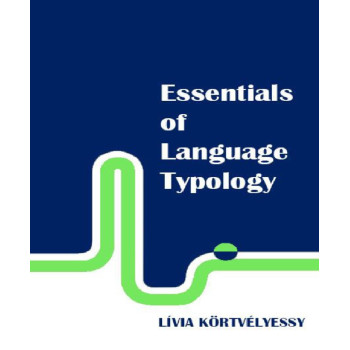
Essentials of Language Typology

Essentials of Language Typology

E-book

E-book

Lívia Körtvélyessy

This university textbook explains to students enrolled in the course Linguistic Typology and Universals the basic terminology, theoretical approaches, and research methods. The textbook is divided into eleven chapters. Each chapter presents theoretical knowledge in an accessible manner, along with practical exercises aimed at developing students’ skills in the respective area.

The textbook covers the following topics: the subject and nature of linguistic typology, a brief history of this linguistic discipline, genealogical classification of languages, various approaches and main objectives of typology across different linguistic levels (phonology, morphology, syntax, and lexicon), as well as areal typology, complex issues of language universals, and the nature and essence of typologists’ work. Given the extensive research activities of linguists from the Department of British and American Studies at Pavol Jozef Šafárik University in Košice, the textbook also introduces students to the results achieved by these scholars in this rapidly developing field of linguistics.

Download the e-book for free (pdf)

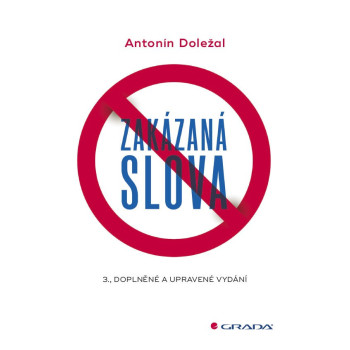
Zakázaná slova

Zakázaná slova

€4.96
Availability: 1 In Stock

Antonín Doležal

Vpravdě „renesanční“ autor se ve své knížce zabývá domněle i skutečně nemravnými či obscénními výrazy. Česká slůvka jsou porovnávána s řečtinou, latinou a mnoha dalšími světovými jazyky. Kromě originálních postřehů a gagů obsahuje kniha celou řadu pasáží etnografických, filozofických a výchovných. Text, který čtenáře potěší, je doplněn zajímavými obrázky, mnoho z nich je nově zařazeno.

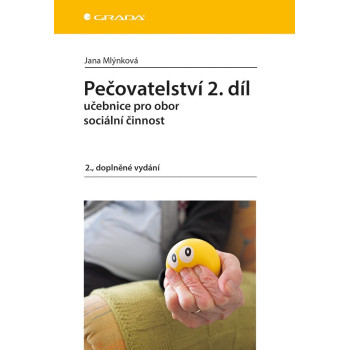
Pečovatelství 2.díl učebnice pro obor sociální činnost

Pečovatelství 2.díl učebnice pro obor sociální...

€17.92
Availability: 1 In Stock

Jana Mlýnková

Moderní, přehledná učebnice pečovatelství pro žáky středních sociálních škol oboru sociální činnost, zpracovaná podle témat probíraných v předmětu pečovatelství. Péče o klienty v různých zařízeních i  domácím prostředí vyžaduje přípravu žáků na komunikaci s klientem a péči o něj, na zvládání psychologického přístupu, edukace klienta i jeho rodiny. 

Publikace je věnována problematice péče o klienty různého věku a postižení a je doplněna četnými fotografiemi. 

Dve úrovne vedomia: bazálne a rozvinuté vedomie

Dve úrovne vedomia: bazálne a rozvinuté vedomie

€19.10
Availability: 2 In Stock

Jozef Kafka

Význam vedomia pre každého človeka ale aj pre pozná­vanie je taký rozhodujúci, že by bolo nesprávne hovoriť o ňom iba pri psychických procesoch, lebo je jadrom ľudskej individuality a práve vedomím sa človek odlišuje od ostat­ných živých tvorov.

Je potešujúce, že nová oblasť poznávania označovaná ako veda o mysli začína sa vedomím zaoberať podrobnejšie a vylučuje tvrdenia, že vedomie nejestvuje hoci zatiaľ hovorí podľa mojej mienky iba o bazálnom vedomí a jej inter­pretácie prekračujú zistené fakty.

V svojej odbornej činnosti a aj v učebniciach som rozlišoval dve cesty poznávania vedomia a  iba postupne som si uvedomil, že mám pred sebou dva úrovne vedomia. V tejto práci  rozlišujem tieto dve úrovne:

  • bazálne vedomie,
  • rozvinuté vedomie.

Ak bazálne vedomie vyjadruje bdenie a spánok, tiež po­zornosť a gnostické rozpoznávanie, teda  idiognózia a somatognózia, rozvinuté vedomie predpokladá reč a vytvára také prejavy, ktoré označujeme ako duševné, teda identita, sebareali­záciu, čo vyjadruje schopnosť uvedomovania si seba, okolia, spoločnosti ale aj všetkého čo sme schopní poznať.

Také chápanie je blízke výkladu fyziológa Pavlova o dvoch signálnych sústavách a chápaniu Poppera o treťom sve­te ale aj ďalšie náhľady, nikto však neurobil určitejšie závery a nedošiel k náhľadu, že naše vedomie má dvojvrstevnú podobu, dve úrovne.

Napriek rozsiahlej a takmer neprehľadnej literatúre vieme o vedomí málo, okrem toho, že je to schopnosť uvedomo­vania, teda schopnosť uvedomiť si, že jestvujem, že som, že jest­vujú aj iní ľudia, že jestvuje niečo čo označujeme ako svet ako nepredstaviteľný vesmír. Uvedomujem si, že som individua­litou jedinečnou, ale limitovanou narodením a smrťou a že mám aj zmysel svojho bytia. Toto uvedomovanie, akokoľvek spo­chybňované je pre človeka prítomné v jeho poznávaní, hoci nemáme zmysly, ktorými by sme vedeli lokalizovať jeho prí­tomnosť v mozgu, ale svojou charakteristikou s dynamikou a integráciou má však duševný charakter, odlišný od    ostatných preja­vov mozgovej činnosti.

Práca sa pokúša v deviatich kapitolách osvetliť, čo sa chápe pojmom bazálne a rozvinuté vedomie    a možno ju rozdeliť do troch okruhov:

V prvých šiestich kapitolách diela hovorí o vedomí ako o doméne bytia človeka, podáva sa preto výklad vedomia a jeho rozlíšenie, potom sa hovorí o kolobehu života a rozvoji ve­domia, kladie sa otázka vedomia u stavovcov, potom náhľady filozofické a metodológia skúmania vedomia. Nasledujú ďalšie kapitoly, ktoré analyzujú podrobnejšie dve formy, úrovne vedomia, sú to kapitoly 7-9, začínajú ana­lýzou individuality človeka, lebo to je báza vedomia aj je­ho foriem, ďalej kapitoly o bazálnom vedomí a rozvinu­tom vedomí, čo považujem za jadro predkladanej práce. Napokon sa opisujú niektoré poruchy vedomia, ktoré dokladajú realitu vedomia v podobe  jej porúch ale aj možnosti rozlí­šenia dvoch úrovní, ktoré sa dajú zistiť pri starostlivom štúdiu a pri práci s chorými.

This website uses cookies to ensure you get the best experience on our website