
Filter By

Year of publication:

Year of publication:

Publication language:

Publication language:

Active filters

  • Year of publication:: 2014
  • Year of publication:: 2018
  • Publication language:: slovenčina, angličtina
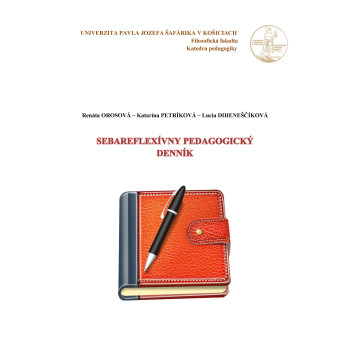
Self-reflection teaching diary

Self-reflection teaching diary

E-book

E-book

Renáta Orosová - Katarína Petríková - Lucia Diheneščíková

Based on the analysis of self-reflection competences in future teachers, opinions of the mentor teachers and their recommendations and the set of pupil-oriented and educational process-oriented competences, a protocol for using self-reflection methods has been created. More precisely, it is a self-reflection teaching diary. It is an innovative method of self-reflection competence development in teaching students in their practical specialized preparation, particularly the self-reflective observation practice and conversation.

The Self-Reflection Teaching Diary is the outcome of the VVGS “Innovation in self-reflection competence development teaching methods in the practical specialized training of future teachers” grant project solving. It is an innovative and creative text-based tool not only for teaching students but also for university teachers specializing in their practical preparation as well as mentor teachers in primary and secondary schools. Its English version can be used by teaching students on their study stays abroad. It is also a transparent and unified tool in the practical preparation of future teachers aiming at the development of their self-reflection competences.
Download the e-book for free (pdf)

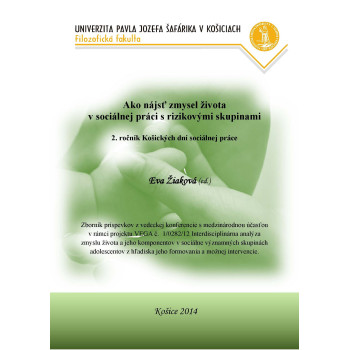
Ako nájsť zmysel života v sociálnej práci s rizikovými skupinami (2. ročník Košických dní sociálnej práce)

Ako nájsť zmysel života v sociálnej práci s...

E-book

E-book

Eva Žiaková (ed.)

Proceedings of the Scientific Conference with International Participation within the VEGA Project No. 1/0282/12 Interdisciplinary Analysis of the Meaning of Life and Its Components in Socially Significant Groups of Adolescents in Terms of Its Formation and Possible Intervention.

The introductory word is a very good opportunity for us to jointly evaluate what we have managed to achieve in addressing our common scientific research task focused on the study of the meaning of life in socially at-risk groups of adolescents. First and foremost, we asked ourselves what we have discovered about the meaning of life so far, that is, what we know about it.

The second question we asked was: what surprised us about the results we have obtained so far. The third question was about what we want to do to resolve the discrepancy between what we have discovered and what we want to achieve.

The final question in evaluating the solution of the scientific research task was: what do we (not) know about the meaning of life of adolescents and want to know in the future, or what should we focus on to develop the most effective logotherapeutic and sociotherapeutic methods for social workers working with socially at-risk groups of adolescents.

Download the e-book for free (pdf)

This website uses cookies to ensure you get the best experience on our website