Filter By

Categories

Categories

Year of publication:

Year of publication:

Publication language:

Publication language:

Faculty:

Faculty:

Method of publication:

Method of publication:

Active filters

  • Categories: Social sciences
  • Year of publication:: 2018
  • Year of publication:: 2018
  • Year of publication:: 2018
  • Year of publication:: 2018
  • Year of publication:: 2018
  • Year of publication:: 2018
  • Year of publication:: 2018
  • Year of publication:: 2018
  • Year of publication:: 2020
  • Year of publication:: 2020
  • Year of publication:: 2020
  • Publication language:: Slovak
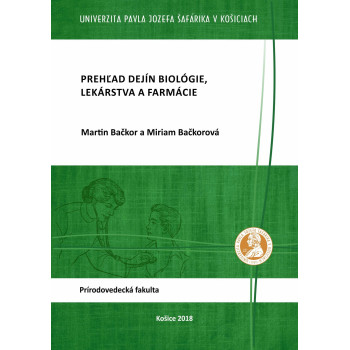
Prehľad dejín biológie, lekárstva a farmácie

Prehľad dejín biológie, lekárstva a farmácie

E-book

E-book

Martin BačkorMiriam Bačkorová

The proposed text focuses on the history of studying biology, medicine, and pharmacy as scientific disciplines from prehistoric times through antiquity, the Middle Ages, and the modern era. The text chronologically organizes the most significant figures in the history of biological scientific disciplines, outlines key characteristics of major historical discoveries, and reevaluates their significance from the perspective of 21st-century science.

The educational text is chronologically divided into the most significant periods of civilization development. The last two completed centuries—the 19th and 20th—are subdivided into major life science fields due to the unprecedented growth of biological disciplines and the resulting volume of acquired information.

Since it can sometimes be challenging in science to define what constitutes the past versus the present of a particular discipline, we have excluded significant biological discoveries from the early 21st century, which are typically regarded as the “present” of biology.

Download the e-book for free (pdf)

Súčasná perspektíva sociálnej inklúzie ľudí s mentálnym znevýhodnením

Súčasná perspektíva sociálnej inklúzie ľudí s...

E-book

E-book

Tatiana ŽiakováDušan Šlosár

The last decade marks not only the average life expectancy increase in healthy population, but also life expectancy increase in group of people with intellectual disorders/disabilities. Due to their diagnosis that defines and classifies them into specific categories, people with intellectual disability are finding themselves in a constant confrontation with obstacles negatively affecting the saturation of their existential needs. It creates mostly educational, social, cultural, psycho-social and economical disadvantage in the context of their lives. Consequently, their active potential is weakened, making it unable for them to influence public affairs in society from a position of an adult or elderly citizen. Building up on this condition, the focus of this monograph is on understanding and explanation of prevailing concept of social inclusion and related concepts of social exclusion. These concepts influence the way we tend to define and think about the character of society, as such.

Simultaneously, we are examining that the quality of coexistence between dominant population and people with intellectual disabilities is dependent on the development of attitudes and opinions of major population towards this specific minority. These attitudes reflect the extent of social tolerance and at the same time serve as a quantification of moral values and equity in the society, whether it concerns any type of small everyday help or professional and institutionalised long-term support.

This monograph focuses on presenting professional care for people with mental disability in form of social services as a dominant type of support in our local environment. We show that the quality of social services inevitably depends on degree of professional competences social workers possess. The significance of professional competences social workers are capable of using is reflected in the degree of the competence and adequacy of their performance. The primary aim, in relation to which professional competences should be accustomed, is to enhance meaningfulness and dignity in life of mentally disabled receivers of the social services.

Competences of social workers are a dynamic phenomenon that modifies along the development of society and also with the frequently altering needs of people with intellectual disability as receivers of the social service. For this reason we designed the presented research to reflect our goal to reappraise the scope of professional competences and define the required professional functions of social workers working with people with intellectual disability.

This monograph is dedicated not only to professionals working with this group of people but also aims at answering basic questions to practical issues that families with a intellectualy disabled member are coming into contact with.

Download the e-book for free (pdf)

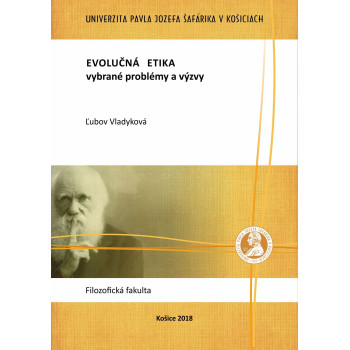
Evolučná etika – vybrané problémy a výzvy

Evolučná etika – vybrané problémy a výzvy

E-book

E-book

Ľubov Vladyková

The present monograph titled Evolutionary Ethics: Selected Issues and Challenges discusses a range of problems, theoretical concepts, and beliefs from the perspective of evolutionary ethics. The term evolution has become one of the central terms in contemporary science and philosophy.

In social sciences in general, and in socio-biology and evolutionary psychology in particular, evolution has had great impact on our understanding of the genesis of culture. Evolutionary theories play a similar role within the theory of consciousness and of the mind (evolutionary epistemology). The interrelation between our evolutionary past and our sense of good and evil is also a subject of heightened interest in ethics; it has in fact become one of its challenges. The concept of evolution challenges the way we create thought patterns through which we understand, or hope to understand, ourselves and the world around us.

This monograph represents a general summary of selected issues in evolutionary ethics, touching upon various aspects of current research into evolutionary ethics and the related domains of evolution, science, ethics, and morals. Evolutionary ethics has become a project which presupposes that in order to understand the essence and basis of morals one must turn to the process of evolution of thought, and to the theories put forth by evolutionists, specifically evolutionary biologists.

The structure of this monograph, as well as its potential usefulness for research and education clearly show that the analysis of the problems discussed here has significant implications for domains far removed from the purely theoretical parts of moral philosophy or biology. The advantage of such discourse is that it enables the implementation of evolutionary ethics in social and ethical issues of public interest (for example Sex Literacy, Sex Education), and this should be recognised and welcome.

Download the e-book for free (pdf)

Prehodnotené dejiny. Historická pamäť – jej miesto a význam pre spoločnosť

Prehodnotené dejiny. Historická pamäť – jej...

E-book

E-book

Lukáš Katriňák (ed.)

Meeting of Young Historians VII.

Proceedings of contributions from the 7th scientific conference of young historians, organized by the Department of History at the Faculty of Arts of UPJŠ in Košice,

European Network Remembrance and Solidarity,

Centre of Social and Psychological Sciences SAS,

Historical Institute SAS,

and the Slovak Historical Society at SAS, held on October 25, 2017 in Košice.

Download the e-book for free (pdf)

Sociálne kompetentnosti starostov obcí na Slovensku

Sociálne kompetentnosti starostov obcí na...

E-book

E-book

Eliška Župová

The scientific monograph examines the issue of competencies among mayors in municipalities of the Slovak Republic. At its core is interpersonal (social) competence, characterized by a set of competencies (interpersonal skills and abilities) formed by comfort in social (interpersonal) situations that mayors encounter daily in performing their duties.

Social (interpersonal) competence is an essential skill for any manager. A mayor should also act as a manager, operating within a social environment, where the level of mastering interpersonal competencies predicts successful behavior in interpersonal situations. Through their actions in these situations, they influence the internal environment of the municipality, including municipal office employees, members of the municipal council, local residents, and external environments—such as collaborations with other municipalities, higher territorial units, contractual agreements with private organizations, or representatives of the third sector.

The central focus of the scientific monograph is the exploration of interpersonal competencies. A pivotal research question addressed was: What is the level of mastery of interpersonal competencies among mayors in municipalities of the Slovak Republic?

Download the e-book for free (pdf)

Národy juhovýchodnej Európy v siločiarach medzinárodnej politiky 1856-1913

Národy juhovýchodnej Európy v siločiarach...

€11.00
Availability: 4 In Stock

Maroš Melichárek

Prvá kapitola monografie nesie názov Veľká východná kríza v rokoch 1875-1878 – súperenie veľmocí na Balkáne. Veľká východná kríza, ktorá vyvrcholia rusko-osmanským konfliktom a následným Berlínskym kongresom dala do pohybu mnoho procesov. Dôležitosť Berlínskeho kongresu a jeho fungovanie je v práci vykreslené z pohľadu jedného zúčastneného balkánskeho štátu a to Srbska. Kapitoly 2 až 5 zhŕňajú medzinárodný kontext a vnútorné predpoklady vytvorenia moderného bulharského a čiernohorského štátu, rovnako i detailný popis emancipácie Macedóncov a Albáncov (Albánske národné hnutie a vytvorenie nezávislého Albánska v roku 1912, Macedónska otázka na konci novoveku a možnosti jej riešenia zo strany veľmocí). Kapitola Konflikt Osmanskej ríše a Talianska o Lýbiu v rokoch  1911-1912 je popisuje vojenský stret medzi veľmocami s globálnymi následkami, ktoré de facto znamenali i pád Osmanskej ríše na európskom kontinente.Kapitola Definitívny pád Osmanskej ríše na európskom kontinente: prvá a druhá balkánska vojna predstavuje chronologický záver monografie a prináša pohľad na najdôležitejšie udalosti balkánskych vojen, armády i fenomény, ktoré doteraz boli v rámci tejto otázky vnímané iba okrajovo (etnické čistky, mobilizácia, propaganda a i.).  Záver práce a kapitola Zahraničná politika Srbska a problematika Bosny a Hercegoviny pred vypuknutím 1. svetovej vojny sa zameriava na hodnotenie srbských ašpirácií (či už ideologických alebo reálnych) smerom k priestoru Bosny a Hercegoviny.

This website uses cookies to ensure you get the best experience on our website