Filter By

Year of publication:

Year of publication:

Faculty:

Faculty:

Active filters

  • Year of publication:: 2016
  • Year of publication:: 2017
  • Year of publication:: 2019
  • Year of publication:: 2019
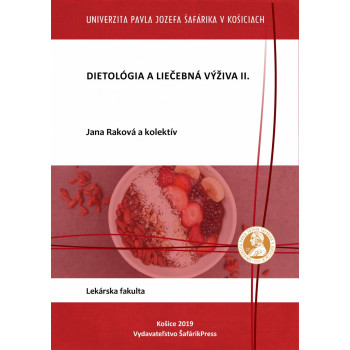
Dietológia a liečebná výživa II.

Dietológia a liečebná výživa II.

E-book

E-book

Jana Raková et al.

The proposed university textbook focuses on topics related to nutrition and nutritional recommendations for patients with selected diseases.

The aim is to provide dietary recommendations for patients with cardiovascular diseases, obesity, metabolic syndrome, gastrointestinal and hepatobiliary disorders, and bone and joint diseases. An important part of the content includes nutrition in relation to cancer. Beneficial for the present time is also a chapter focused on food allergies and intolerances.

The publication highlights specific and targeted nutritional interventions as part of the treatment regimen, which is essential to know and follow in a patient's personal life.

PhDr. Jana Raková, PhD.
(on behalf of the authors' collective)

Download the e-book for free (pdf)

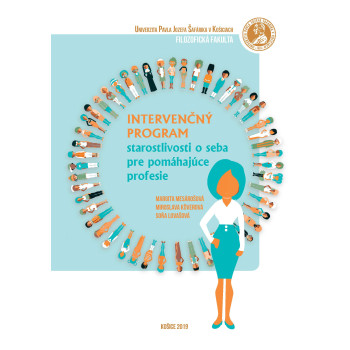
Intervenčný program starostlivosti o seba pre pomáhajúce profesie

Intervenčný program starostlivosti o seba pre...

E-book

E-book

Margita MesárošováMiroslava KöverováSoňa Lovašová

Intervention Program for Supporting Self-Care in Helping Professions: "How Do I Take Care of Myself?" The intervention program "How Do I Take Care of Myself?" was developed as part of the research project APVV14-0921, "Self-Care as a Factor in Coping with the Negative Consequences of Engaging in Helping Professions." Its uniqueness lies in being created based on specific research outputs from the program's authors and project.

In the first chapter, the authors offer insights into the preparation of the intervention program, justifying its theoretical foundations, methods, and specifics of the program participants. They also provide an overview of research on the effectiveness of various intervention programs aimed at reducing the negative consequences of helping and enhancing self-care and other positive effects of engaging in helping professions. Subsequent chapters focus on a detailed analysis and evaluation of the effectiveness of the intervention program "How Do I Take Care of Myself?" and its comparison with the effectiveness of other programs, which were differently focused, targeted at different populations of helping professionals, and had different theoretical and practical orientations and foundations. Most of these studies demonstrated positive changes only in isolated cases, due to various methodological shortcomings often related to practical application.

What differentiates the intervention program presented in this monograph is the participation of helping professionals actively practicing in the social field, unlike most intervention programs compiled and validated for students of these professions. The student population, being more accessible to researchers, allows for better methodology, including a larger number of participants, as well as experimental manipulation and group balancing. In the case of participants in the validation of the program "How Do I Take Care of Myself?", it involved practitioners who are engaged in the daily work process and completed training during their work breaks, which placed high demands on balancing their work and personal tasks. We believe that the effects we discovered during the validation of the effectiveness of the presented intervention program were not always clearly mathematically graspable but were evident from individual feedback.

We present the text of this monograph to the professional public with the aim of highlighting the benefits, limitations of the intervention program, as well as inspiring researchers and practitioners to further work in this area.

Authors

Download the e-book for free (pdf)

Ošetrovateľstvo vo vnútornom lekárstve III

Ošetrovateľstvo vo vnútornom lekárstve III

E-book

E-book

Mária Sováriová Soósová a kol.

The proposed university textbook provides knowledge in the field of nursing in internal medicine. It is intended primarily for students of the nursing program, but also for nurses working in this specialization. The textbook builds on the previous two parts: Nursing Process in Internal Medicine I (Sováriová Soósová, 2006) and Nursing Process in Internal Medicine II (Suchanová, 2007). It is divided into four chapters, focusing on disorders of water and electrolyte balance and acid-base equilibrium, kidney and urinary tract diseases, endocrine system diseases, and musculoskeletal disorders.

Each chapter is similarly structured, beginning with diagnostic methods commonly used in the respective area. Subsequent subchapters address nursing care for selected diseases of specific bodily systems. Each subchapter consists of a clinical introduction (characteristics of the disease, its etiology, clinical presentation, diagnosis, and treatment) and nursing care for the given disease. This includes assessment, formulation of nursing diagnoses, and planning nursing care (setting goals, outcome criteria, and planning possible interventions).

The textbook serves as a model framework and algorithm for managing nursing care using the nursing process method.

Download the e-book for free (pdf)

Ošetrovateľské techniky

Ošetrovateľské techniky

E-book

E-book

Libuša Tirpáková - Mária Sováriová Soósová a kol.

It is expected that nurses and professionals working in healthcare will be able to perform various specialized procedures, or assist with selected procedures, skillfully, confidently, and safely.

The university textbook of Nursing Techniques guides students through the most commonly performed nursing activities, reflecting the latest knowledge from the profession, evidence-based practice, and professional guidelines. A significant aspect of this publication is its emphasis on patient individuality and involvement in the planning and implementation of procedures, as well as the prevention of complications and the consistent performance of nursing interventions in accordance with the latest professional and scientific knowledge.

The textbook is divided into twelve chapters. In the introductory chapters, the authors address the organization of the nursing unit and infection control in healthcare facilities. Further chapters are devoted to patient assessment, especially vital functions, nutritional care, preparation and administration of various forms of medication, collection of biological material, care of urinary and bowel elimination, nurse assistance during punctures, wound care, and electrocardiographic examination.

The main aim is to address primarily nursing students, but also students of general and dental medicine and selected healthcare disciplines. We believe that both students and professionals will find in this textbook a guide and a practical assistant.

Download the e-book for free (pdf)

This website uses cookies to ensure you get the best experience on our website