Filter By

Categories

Categories

Selections

Selections

Year of publication:

Year of publication:

Publication language:

Publication language:

Faculty:

Faculty:

Method of publication:

Method of publication:

Active filters

  • Year of publication:: 2019
  • Year of publication:: 2020
  • Year of publication:: 2023
  • Year of publication:: 2023
  • Year of publication:: 2023
  • Year of publication:: 2023
  • Year of publication:: 2023
  • Year of publication:: 2023
  • Year of publication:: 2024
  • Year of publication:: 2024
  • Year of publication:: 2024
  • Year of publication:: 2024
  • Year of publication:: 2024
  • Year of publication:: 2026
  • Year of publication:: 2026
  • Year of publication:: 2026
  • Faculty:: Prírodovedecká fakulta
  • Faculty:: Prírodovedecká fakulta
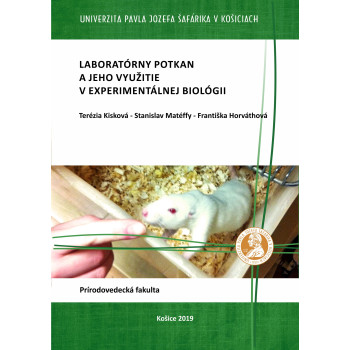
Laboratórny potkan a jeho využitie v experimentálnej biológii

Laboratórny potkan a jeho využitie v...

E-book

E-book

Terézia KiskováStanislav MatéffyFrantiška Horváthová

The laboratory rat (Rattus norvegicus) is one of the most commonly used experimental animals. It serves as a model organism for analyzing numerous biological processes and pathological mechanisms, such as cardiovascular diseases, metabolic disorders (e.g., lipid metabolism, diabetes mellitus), neurological and neuropsychiatric conditions (e.g., stroke, epilepsy, or Alzheimer's disease), neurobehavioral research, autoimmune diseases (e.g., arthritis), cancer, and renal diseases. It offers many unique advantages for modeling human diseases, testing drugs and natural substances, and studying responses to environmental factors. The size of the laboratory rat, compared to the mouse, creates ideal conditions for physiological manipulations. Additionally, rats are used in clinical toxicology to test chemical substances (Hedrich, 2000).
Download the e-book for free (pdf)

Študentská vedecká konferencia PF UPJŠ 2019

Študentská vedecká konferencia PF UPJŠ 2019

E-book

E-book

Katarína Cechlárová (ed.)

This year, the Student Scientific Conference was held on April 24, 2019, across 17 sections in disciplines such as biology and ecology, chemistry, physics, geography, mathematics, informatics, and their didactics. Bachelor’s and master’s students presented a total of 124 contributions. The most successful participants advanced to national or traditional Czech-Slovak student scientific showcases in fields like physics, chemistry, mathematics, informatics, and mathematics didactics.

In addition to faculty students, 10 high school students participated outside the competition. They were invited based on their achievements in subject-specific Olympiads or because they were already engaged with the faculty under the guidance of dedicated teachers in laboratory work as part of their preparation for future studies. The day also featured a programming competition with 23 participants, an IHRA contest involving 16 teams of high school students and 15 teams from elementary schools, and a new Puzzle section where 72 high school students from the region competed.

The abstracts from the Student Scientific Conference demonstrate that our faculty's students not only absorb theoretical knowledge delivered in lectures but also actively engage in solving partial scientific problems that align with research objectives at the institutes of PF UPJŠ. This collection serves as both a record of scientific activity at the faculty and a dignified presentation for the broader public.

Prof. RNDr. Katarína Cechlárová, DrSc.

Vice-Dean for Education

Doc. RNDr. Gabriel Semanišin, PhD.

Dean of the Faculty

Download the e-book for free  (pdf)

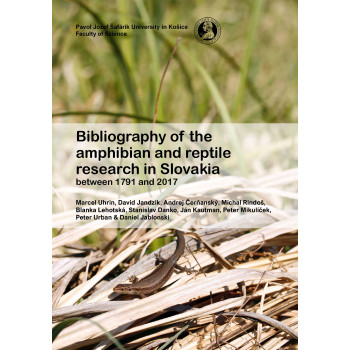
Bibliography of the amphibian and reptile research in Slovakia between 1791 and 2017

Bibliography of the amphibian and reptile...

E-book

E-book

Marcel UhrinDavid JandzikAndrej ČerňanskýMichal RindošBlanka LehotskáStanislav DankoJán KautmanPeter MikulíčekPeter UrbanDaniel Jablonski

Bibliographies provide basic scientific information, illustrate quality and intensity of research in a particular topic, area, or time, and thus help build a cultural-historical perspective of society’s appreciation of knowledge and education. Here we provide a bibliography of herpetological research in the region of Slovakia between the years 1791 and 2017. We collected 2,183 references authored by 1,453 different authors and covering all species of amphibians (18) and reptiles (13) occurring in Slovakia and, in addition, amphibian and reptile taxa occurring in 94 other countries.

Most of the contributions were published in popular magazines and non-indexed journals, while only about 12% of all references represent scientific articles from journals indexed in relevant scientific databases. The extensiveness of study on amphibians and reptiles has varied among different periods within the selected time frame. However, an obvious intensification in the field of herpetology can be observed, especially during the second half of the 20th century. While there have only been few professionals specialized in herpetology, an important role in promoting the research and conservation of amphibians and reptiles in Slovakia has been played by non-governmental organizations and hobbyists. The most frequent type of herpetological data in the referenced literature comes from faunistic research, followed by conservation and general information on herpetofauna, with the majority of published articles in indexed journals coming from the fields of palaeontology, phylogeography, and population genetics.

The presented bibliography is the first step towards building a solid base for future systematic herpetological research in the country and Central Europe.

Download the e-book for free (pdf)

Workshop on Quantum Magnetism: Theoretical Challenges and Future Perspectives

Workshop on Quantum Magnetism: Theoretical...

E-book

E-book

Jozef StrečkaHana ČenčarikováAndrej Gendiar (eds.)

The proceeding involves programme and abstracts of Workshop on Quantum Magnetism: Theoretical Challenges and Future Perspectives, which was held on June 7th – June 8th, 2019, in Košice, Slovakia.

The workshop is organized by Faculty of Science of Pavol Jozef Šafárik University in Košice and Institute of Experimental Physics of Slovak Academy of Sciences in Košice under the financial support of Slovak Research and Development Agency.

The main conference topics are devoted to state-of-the-art problems of Quantum Theory of Magnetism inncluding molecular magnetism, highly frustrated magnetism, magnetic phase transitions, quantum spin liquids, strongly correlated systems, exotic quantum states, flat-band systems and quantum entanglement.

Download the e-book for free  (pdf)

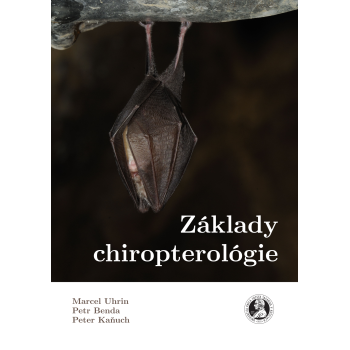
Základy chiropterológie

Základy chiropterológie

€25.00
Availability: 13 In Stock

Marcel Uhrin - Petr Benda -  Peter Kaňuch

Bats represent a unique group of mammals, characterised by different life strategies. They are the only mammals capable of active flight, which, combined with their almost exclusively nocturnal activity, has led to the evolution of specific adaptations. One of the most striking is echolocation, which enables them to orientate themselves perfectly in their surroundings in the dark. Bats are mainly native to the tropics, but have also colonised areas outside the tropics, which, has led to a complex phenological cycle with active phases and interruptions during hibernation, especially in temperate zones. In this diverse and species-rich group (almost 1,500 known species), there is a wide range of social organisation as well as feeding and roosting strategies. The textbook "Fundamentals of Chiropterology" brings the current state of knowledge about these extraordinary animals in eleven chapters and two appendices for the first time in the Slovak language.

This website uses cookies to ensure you get the best experience on our website