Slovenčina


E-book
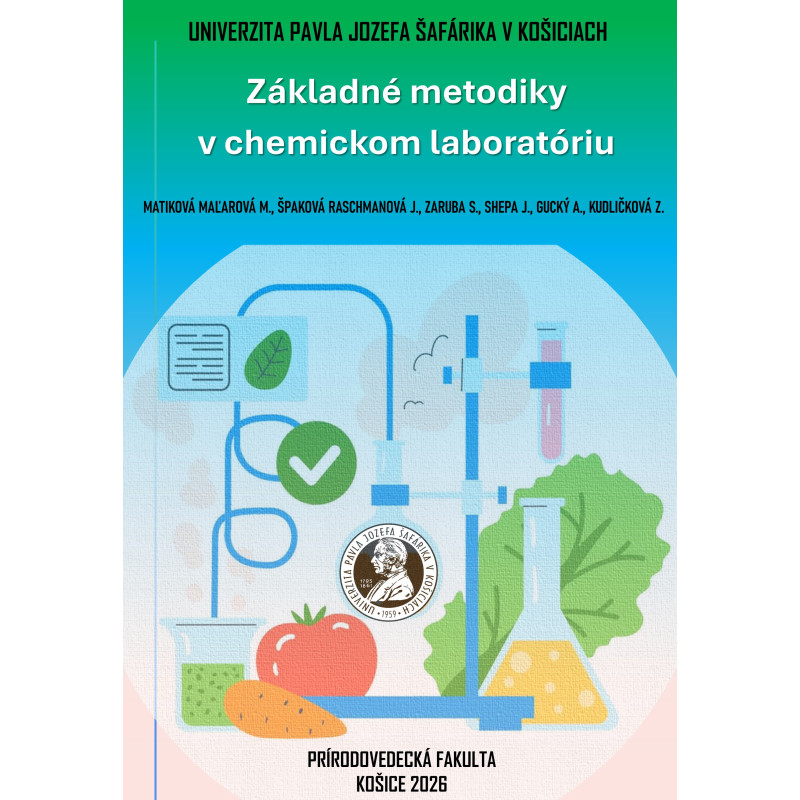
Miroslava Matiková Malarová Jana Špaková Raschmanová Serhii Zaruba Jana Shepa Adrián Gucký Zuzana Kudličková
The university textbook is intended for students enrolled in the Chemical Laboratory Specialist study programme. The textbook presents basic laboratory equipment, glassware, tools, and balances. It explains the proper use, cleaning, and maintenance of laboratory glassware. It describes basic purification and separation methods, such as filtration, distillation, and extraction, and covers thin-layer chromatography and NMR spectroscopy. The practical section consists of ten laboratory experiments from various fields of chemistry, focusing on the preparation of substances, work with solutions, and basic analytical determinations. Students become familiar with titrations and the measurement of viscosity, pH, and density. The laboratory exercises also include water analysis, spectrophotometry, and work with biological material. Attention is also given to the isolation of substances from natural sources and their subsequent identification. Throughout the university textbook, theoretical knowledge is directly linked to practical laboratory procedures. The textbook supports the development of safe and technically correct working habits required for further study and professional practice.
Data sheet
E-book
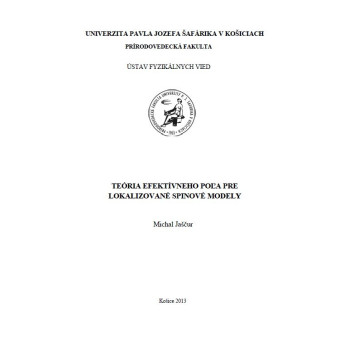
This monograph is devoted to the discussion of effective field theory based on the differential operator method, originally introduced by Honmura and Kaneyoshi in 1979, which remains actively used for theoretical studies of localized spin models of magnetism—particularly variants of the Ising model. To date, this methodology has been applied by numerous authors to investigate a wide range of systems, including crystalline systems, diluted magnetic systems, systems with random exchange interactions, amorphous magnetic materials, systems under random magnetic and crystalline fields, thin magnetic layers, magnetic systems with free surfaces, binary and ternary magnetic alloys, among others.
During my scientific career, I have collaborated with several leading experts in this field—including Prof. Kaneyoshi, with whom I completed two long-term research stays—to advance the development of the differential operator method (and consequently effective field theory). Within this research area, I have published over 40 scientific papers in prominent international physics journals. These works include both methodological advancements and significant applications that predict intriguing physical phenomena, such as multicompensation phenomena in ferrimagnets.
E-book
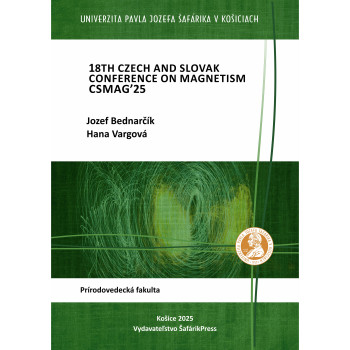
Jozef Bednarčík - Hana Vargová (eds.)
The Czech and Slovak Conference on Magnetism (CSMAG) is a scientific meeting that honors a longstanding tradition initiated in Košice in 1960. Evolving from a regional gathering of the Czechoslovak magnetic community into a prominent international forum, CSMAG brings together researchers from diverse fields of magnetism. The conference covers a wide range of topics including theoretical and experimental magnetism, magnetic materials for energy and spintronics applications, low-dimensional and molecular magnets, rare-earth and actinide systems, and multifunctional materials. With contributions from over 20 countries, CSMAG’25 fosters cross-disciplinary collaboration and showcases the latest advances in both fundamental studies and practical applications of magnetic phenomena.
E-book
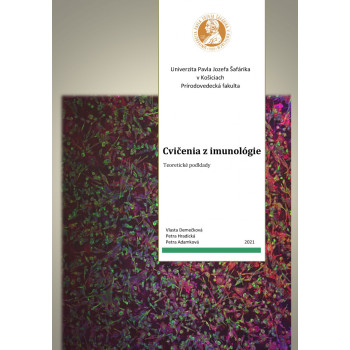
Vlasta Demečková - Petra Hradická - Petra Adamková
The learning material for the course Practice in Immunology is based on several years of experience with teaching this subject, but mainly to provide students from the Biology Department at the Faculty of Natural Sciences, UPJŠ in Košice with sufficient theoretical background for practical exercises. It also serves as a scientific diary for detailed recording of all experimental data necessary for preparing laboratory protocols from individual exercises.
In studying biology, it is essential that students thoroughly understand not only the basics of each discipline but also acquire practical skills, including designing scientific experiments, selecting appropriate analytical/investigative techniques up to interpreting and presenting experimental data. The goal of this new publication is therefore to provide master's students with a practical study guide that supports and expands their knowledge about basic immunology principles.
Download e-book for free (pdf)
E-book
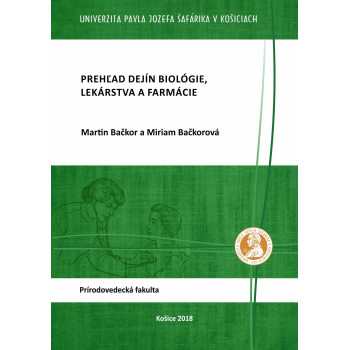
Martin Bačkor - Miriam Bačkorová
The proposed text focuses on the history of studying biology, medicine, and pharmacy as scientific disciplines from prehistoric times through antiquity, the Middle Ages, and the modern era. The text chronologically organizes the most significant figures in the history of biological scientific disciplines, outlines key characteristics of major historical discoveries, and reevaluates their significance from the perspective of 21st-century science.
The educational text is chronologically divided into the most significant periods of civilization development. The last two completed centuries—the 19th and 20th—are subdivided into major life science fields due to the unprecedented growth of biological disciplines and the resulting volume of acquired information.
Since it can sometimes be challenging in science to define what constitutes the past versus the present of a particular discipline, we have excluded significant biological discoveries from the early 21st century, which are typically regarded as the “present” of biology.