Filter By

Categories

Categories

Selections

Selections

Year of publication:

Year of publication:

Publication language:

Publication language:

Faculty:

Faculty:

Method of publication:

Method of publication:

Active filters

  • Categories: Science
  • Year of publication:: 2011
  • Year of publication:: 2022
  • Year of publication:: 2022
  • Year of publication:: 2024
  • Year of publication:: 2024
  • Year of publication:: 2024
  • Publication language:: Slovak
Otvorená veda – Zdrojový kód a softvér

Otvorená veda – Zdrojový kód a softvér

E-book

E-book

Pellegrini François et al.

The guide forms part of the Pathway to Open Science collection by the French Ministry of Higher Education and Research. It addresses the specific challenges related to opening source code and software created and used in scientific research. It provides answers and tools that can be immediately implemented in practice.

You will find here the key to understanding the role of software in the open science ecosystem.

We hope this will encourage you to contribute your work to this effort and the long-term benefit of the academic community.

Download the e-book for free

Ecology of Soil Animals

Ecology of Soil Animals

E-book

E-book

Natália Raschmanová - Ľubomír Kováč

The text summarizes the basic knowledge about the functioning of the soil ecosystem with a focus on soil protists and dominant groups of soil animals. Characteristics of each soil animal group include basic morphology, ecology, distribution, population dynamics and their importance in the soil ecosystem. The aim of the text is to gain a basic understanding of the diversity and interactions of soil fauna with the soil environment. It deals with the ecological classification of soil fauna on the basis of body size, presence in the soil during the life cycle, food preference and by locomotion. It highlights important morphological and ecophysiological adaptations of soil fauna to physical and chemical environmental factors. The text also gives an overview of the basic methods in the field collection of soil fauna and their extraction from soil samples under laboratory conditions. It further informs on the method of taxonomic identification and ecological evaluation of soil fauna communities. Discusses the soil fauna of different types of ecosystems. It highlights the differences in soil fauna communities that inhabit grassland and forest habitats, and agricultural soils. This teaching material is intended for students in biology degree programmes.

Download the e-book for free (pdf)

Zborník abstraktov z X. medzinárodného geografického kolokvia

Zborník abstraktov z X. medzinárodného...

E-book

E-book

Marián Kulla – Ladislav Novotný – Petra Dávidová – Anton Uhrin (eds.)

Danišovce 16. – 18. 10. 2024

Zborník abstraktov, ktorý máte pred sebou, obsahuje príspevky prezentované na X. Medzinárodnom geografickom kolokviu v Danišovciach. Ústav geografie na Prírodovedeckej fakulte UPJŠ v Košiciach toto podujatie organizuje už od svojho vzniku ako platformu na výmenu vedeckých poznatkov, primárne medzi geografmi zo Slovenska a Česka. Aktuálny jubilejný ročník spoluorganizovali Prírodovedecká fakulta UPJŠ v Košiciach, Slovenská geografická spoločnosť pri SAV v Bratislave v zastúpení jej Košickej pobočky a spoločnosť UMBRA Solutions Košice.

Download the e-book for free (pdf)

Automation of Laboratory Experiments in LabVIEW environment

Automation of Laboratory Experiments in LabVIEW...

E-book

E-book

Erik Čižmár

Textbook Automation of Laboratory Experiments in LabVIEW environment is devoted to the basics of graphical programming and shows the way how to communicate with measuring equipment and Arduino development boards in LabVIEW. The basic concepts of creating a virtual instrument and its interactive user environment are introduced. Three physical tasks are presented, the practical implementation of which takes place with the use appropriate instrumentation and LabVIEW. Practical tasks are dedicated to measuring the transmission characteristics of a low-pass RC filter, measuring the natural resonant frequency of a quartz tuning fork using the heterodyne pulse method, and mapping the magnetic field of a permanent magnet using Arduino.

Download the e-book for free (pdf)

Základy organickej chémie.  Vysokoškolský učebný text k predmetu Základy chémie

Základy organickej chémie. Vysokoškolský...

E-book

E-book

Mária Vilková - Zuzana Kudličková - Ján Elečko

Organic chemistry is the chemistry of carbon. Organic compounds in the form of large molecules (macromolecules), such as nucleic acids, proteins, carbohydrates, and lipids are the basic elements of living organisms. This study material is created for non-chemistry students, especially students of biology. Most of these students have little or no knowledge of organic chemistry. Therefore, we proceed from the basic principles of organic chemistry to biochemistry.

The basic principles of organic chemistry and biochemistry are briefly summarized in individual chapters, but the main content consists of tasks for practising basic knowledge. To check the correctness of solving the tasks, the correct solutions are also given. The importance of this study material lies in the fact that students will get additional study material that they will use in studying the subject Basics of Chemistry.

Download the e-book for free (pdf)

JARNÁ ŠKOLA DOKTORANDOV 2024

JARNÁ ŠKOLA DOKTORANDOV 2024

E-book

E-book

Monika Halánová (ed.)

On June 4-6, 2024, Stará Lesná will host the 10th year of the university-wide event ‘Spring School of Doctoral Students of Pavol Jozef Šafárik University in Košice’. As part of the professional program, there will be five plenary lectures by prominent experts from Pavol Jozef Šafárik University in Košice and Comenius University, and one workshop will be held. A total of 47 full-time doctoral students will present the results of their scientific research work, of which 23 doctoral students in the section of medical and natural sciences (Faculty of Medicine/Faculty of Science) and 24 doctoral students in the section of social sciences and humanities (Faculty of Law/Faculty of Public Administration/Faculty of Arts). Part of the professional program of the event will be a panel discussion with the Management of Pavol Jozef Šafárik University in Košice.

Download the e-book for free (pdf)

MAGNETIC DOMAINS: SPECIAL PHYSICAL PRACTICE 1

MAGNETIC DOMAINS: SPECIAL PHYSICAL PRACTICE 1

E-book

E-book

Adriana Zeleňáková

One of the fundamental characteristics of the magnetic state of ferromagnetic materials is the existence of a domain structure. The university textbook "MAGNETIC DOMAINS: SPECIAL PHYSICAL PRACTICE 1" is intended primarily for students of the Master's programme in Physics of Condensed Matter FKLm and for the PhD programme in Progressive Materials PMd within the profile subject Special Practice 1 at the Institute of Physical Sciences of the Faculty of Sciences of the Pavol Jozef Šafárik University in Košice.  The textbook is divided into seven chapters. The first chapter is devoted to the basics of domain theory, including the history of domain observation and the specification of different types of energies in ferromagnetic body. The second chapter presents the relationship between domain structure and magnetisation processes in ferromagnetic materials The third chapter describes the different types of domain-wall interactions with the defect. The fourth chapter illustrates examples of domain structure in selected ferromagnetic body such as grain oriented and non-grain oriented electrical steels, amorphous and nanocrystalline ribbons. The fifth chapter summarises an overview of the different experimental methods used to visualise the domain structure and their advantages or disadvantages with respect to the structure of ferromagnetic materials. The last two chapters, the sixth and the seventh, are devoted to specific experimental tasks for observing the domain structure of a selected polycrystalline sample using the optical microscope Bitter powder method and the MFM (magnetic force microscopy) method. During the preparation of this undergraduate text, its individual parts were developed using the foreign language literature listed in the recommended references.

Download the e-book for free (pdf)

Vybrané úlohy a výpočty z biochémie – metabolizmus

Vybrané úlohy a výpočty z biochémie – metabolizmus

E-book

E-book

Nataša Tomášková

Selected tasks and problems from biochemistry – metabolism follow biochemistry lectures on metabolism and individual metabolic pathways for students of the second and third year of the bachelor’s degree in the fields of chemistry, biology and their combinations with other fields. Scripts provide an opportunity to better understand the lectured subject matter of metabolism through the solution of tasks and problems as serve as a basis for one-hour exercises. The scripts are divided thematically into eleven chapters, and each chapter contains 10 tasks and 7 problems. At the beginning of the chapters there is a short description and explanation of the given metabolic pathway. However, when solving the tasks, the student must focus mainly on the curriculum that was presented on the given topic in the lecture. Subsequently, at the end of chapter, answers to problems are also presented. These scripts are intentionally accessible only in electronic form. The reason is the effort to continuously update and modernize individual tasks.

Download e-book for free (pdf)

Výpočtová a kognitívna neuroveda II (Návody na cvičenia)

Výpočtová a kognitívna neuroveda II (Návody na...

E-book

E-book

Norbert Kopčo

Neuroscience is an interdisciplinary field of science at the interface of biological, psychological and computer sciences, which aims to describe the functioning of the brain and mind. Computational and cognitive neuroscience are subfields of neuroscience focused on the study of information processing in the human and animal nervous systems, and on the theoretical description of the brain and mind. This university textbook contains several assignments that provide an overview of the methods used in computational and cognitive neuroscience, with an emphasis on mathematical modeling and on the behavioral study of cognitive processes. The textbook builds on the author's previous works.

Download e-book for free (pdf)

Didaktika školských pokusov zo všeobecnej a anorganickej chémie

Didaktika školských pokusov zo všeobecnej a...

E-book

E-book

Ivana Sotáková-Martin Vavra-Mária Ganajová

This textbook has been designed for the master students of chemistry teaching (combined) at the Faculty of Science, Pavol Jozef Šafárik University in Košice as a source of model school experiments in general and inorganic chemistry. It will be used for teaching the Special Practice of School Experiments I compulsory course. It consists of instructions for experiments related to the selected topics in general and inorganic chemistry as well as the didactic and technical aspects of their performance. Each experiment includes an explanation of the principle, specification of the tools and chemicals needed, working procedure, and the respective apparatus assembly scheme. At the end of each experiment, the observation and explanation necessary for the correct interpretation of the results of the chemical experiment performed are provided. To follow the requirements for the digital transformation of education, selected computer-aided experiments and visualiser projections have been included as well. The next part is focused on the work with the monitoring suitcase, which can be used for making simple field experiments related to environmental topics. The final part is dedicated to attractive experiments that complement the topics in inorganic chemistry and can be used to motivate students. All experiment instructions are in line with the requirements specified by the state educational programmes for primary and grammar schools. This book allows teachers to select appropriate demonstrative experiments or experiments for laboratory classes performed by students themselves. The videos of selected experiments are also available as part of the interactive periodical table of elements operated by the Institute of Chemistry, Faculty of Science, Pavol Jozef Šafárik University in Košice.

Download e-book for free (pdf)

Jarná škola doktorandov 2022

Jarná škola doktorandov 2022

E-book

E-book

Peter Fedoročko (eds.)

From June 14 to June 17, 2022, the 8th annual Spring School for Doctoral Students at Pavol Jozef Šafárik University in Košice will take place in Liptovský Ján. The scientific program of the spring school will comprise 3 plenary lectures by leading scientific experts and 1 workshop. Doctoral students will present their research papers in two sections: 22 doctoral students of Faculty of Public Administration, Faculty of Law and Faculty of Arts, and 26 doctoral students of Faculty of Medicine and Faculty of Science. The scientific programme of the spring school will also include a panel discussion with the management of Pavol Jozef Šafárik University in Košice.

Download the e-book for free (pdf)

Sekundárny metabolizmus (Úvod do štúdia prírodných látok)

Sekundárny metabolizmus (Úvod do štúdia...

E-book

E-book

Miroslava Martinková

This electronic material focuses on the subject of secondary metabolism and its products - secondary metabolites. The material gives an overview of the basic building blocks and construction mechanisms through which molecules can be synthesized in living organisms (plants). The processes of formation of the mentioned metabolites are explained using the basic mechanisms of organic reactions. Several of the secondary metabolites presented have a remarkable biological profile and are used as therapeutics or serve as lead compounds for the development of novel pharmacological agents. This electronic document is primarily intended for students of the Master's degree programme in Organic Chemistry as supporting material for the profile subject Chemistry of Natural Products.

Download e-book for free (pdf)

Názvoslovie organických zlúčenín

Názvoslovie organických zlúčenín

E-book

E-book

Miroslava Martinková

This electronic material provides the basic principles of creating a systematic nomenclature of organic compounds, from the simplest hydrocarbons to the more complicated nomenclature of carbohydrates. For some groups of derivatives, alternative ways of generating system names are also mentioned, as well as the most common trivial names that are still in use in the literature and in practice, in some cases being the characteristic (dominant) ones. In the introductory section, the basic rules to be respected when writing names of organic compounds are discussed. This document is intended primarily for interdisciplinary undergraduate and graduate students as support material for the courses Organic Chemistry and Selected Chapters in Organic Chemistry and Biochemistry. In the final section of this document, solved examples are given so that the student can check how the rules for forming the names of organic compounds have been understood.

Download e-book for free (pdf)

Teória vypočítateľnosti

Teória vypočítateľnosti

E-book

E-book

Ľubomír Antoni-Stanislav Krajči

An important part of theoretical computer science is the problem of Turing machines. This computational model has two basic properties: like any other computational program, the software of a Turing machine is composed of instructions, but in its case they are all of a single type. Every other (so far known) computer program can be transformed into a Turing machine program without loss of information. While the second feature reduces the question of what a calculator cannot do to the question of what a Turing machine cannot do, the first feature allows a much simpler investigation of such a question. Using this computational model, we can thus find concrete problems that no automaton can ever deal with (perhaps the most famous is the problem of the Turing machine stopping). Their existence demonstrates the fundamental limitations of (not only ideal) computational means, and thus encourages both criticality and humility in our thinking.

Download e-book for free (pdf)

Pokročilé elektrochemické metódy

Pokročilé elektrochemické metódy

E-book

E-book

Ivana Šišoláková - Radka Gorejová - Jana Shepa - Renáta Oriňaková

The university textbook "Advanced Electrochemical Methods" is a teaching aid intended for master's or doctoral students studying electrochemical subjects at the Department of Physical Chemistry, Faculty of Science, Pavol Jozef Šafárik University in Košice.

These textbooks follow and further develop textbooks focused on the basic electrochemical methods currently used in modern research. The presented teaching texts are processed in sixteen clear chapters, where they provide a theoretical principle and derivation of electrochemical processes and mechanisms in individual methods. Teaching texts also consist of practical laboratory exercises, in which students can try out the real application of the studied electrochemical methods.

The practical tasks are focused primarily on the demonstration of research that is carried out at our workplace. Students will be able to try, for example, electrochemical modification of the electrode surface, preparation of electrochemical sensors for the determination of analytes, preparation and characterization of a dye-sensitized solar cell or electrochemical evolution of hydrogen.

Download the e-book for free (pdf)

A guide to the didactics of biology

A guide to the didactics of biology

E-book

E-book

Katarína Kimáková

The textbook is intended for university students who are preparing for the profession of biology teacher. The structure of the book is similar to an encyclopedia, with one page devoted to each content item, but the topics of the chapters and subchapters follow each other.

The explanatory text on the page illustrates the diagram and there are notes and links to other sources of information. For better orientation, the content of the textbook is divided into 8 sections, which cover several chapters. It follows the general didactics, which it connects with the teaching of biological content. The book provides a basic orientation in the approaches to learning this subject, and also explains the relationship between biology as a science and the didactics of biology. It deals with teaching standards and curricula, advises on how to master biological concepts and understanding, how to communicate with students in biology classes, when and why are effective visual and practical methods. It acquaints the reader with the issue of setting goals for biological education in the cognitive, psychomotor and affective areas in relation to formative and summative assessment.

Hopeful as well as experienced teachers will find in this publication not only a look into the history of teaching biology, but also a look into the future. Current trends in biology teaching, the connection of teaching with digital technologies, the virtual learning environment and interactive simulations and models belong to science lessons today.

Download the e-book for free (pdf)

ATÓMOVÁ ŠTRUKTÚRA LÁTOK I - Základy RTG kryštalografie

ATÓMOVÁ ŠTRUKTÚRA LÁTOK I - Základy RTG...

E-book

E-book

Jozef Bednarčík

Crystallography deals with discerning the arrangement and bonding of atoms in crystalline solids. Almost immediately after their discovery, X-rays began to be used to study the internal structure of substances.

The first chapter of this textbook deals with the basic concepts of crystallography. At the beginning, crystalline solids are characterized. In the next section, the basic types of bonds and their characteristics are briefly presented. The main subject of this chapter is the interpretation of basic concepts such as symmetry operations, translational periodicity, grid, elementary cell. Spatial lattices and crystal systems are presented. At the end of this chapter, attention is paid to the description of individual types of defects in crystal structures. In the second chapter, the Bohr model of the hydrogen atom is presented. Individual quantum numbers and their meaning are given.

Next, energy levels and allowed transitions within an atom with multiple electrons are described. The second chapter concludes with the characterization of the basic absorption and emission processes. The third chapter is devoted to the production of X-ray radiation and its properties. Sources of X-ray radiation and a description of their operation are presented.

Interaction of X-ray radiation with matter, absorption and detection of X-ray radiation are the subject of the last part of this chapter.

Download the e-book for free (pdf)

Počítačová fyzika II

Počítačová fyzika II

E-book

E-book

Milan Žukovič

This textbook is intended for master's degree students and is a follow-up to the Computational Physics I course studied at the bachelor's level. The content of the textbook Computational Physics II focuses on stochastic methods of solving physical problems, mainly on Monte Carlo (MC) simulation of many-particle systems.

The focus on this computationally intensive approach is motivated by the gradual increase in the computing capacities of ordinary computers as well as the introduction of high-performance computing clusters. This has led to significant progress in the development of new simulation techniques, thanks to which MC simulations have found application in various areas of research and application practice. Considering the main research focus of the department, this text is particularly devoted to the presentation of basic and more advanced MC simulation techniques applied to a simple Ising spin model in order to investigate its magnetic, thermodynamic and critical properties.

The next part is devoted to MC simulations of random processes. It focuses on the simplest but also the most basic random walk process and demonstrates its applications in financial analysis and the solution of a quantum system described by the time-dependent Schrödinger equation. The last part is dedicated to the basics of molecular dynamics, applied to simulating the classical movement of atoms in a given force field. By mastering the problems addressed in this course, students will obtain a potential tool for working out of their diploma theses, or a methodology useful for their further scientific and research practice in the field of investigating of complex systems.

The lectured topic is subsequently exercised in the form of preparing projects implemented in the freely distributable software Octave, which is easy on the user's programming skills and which students have the opportunity to familiarize themselves with in the previous study.

Download e-book for free (pdf)

BIOLÓGIA LIŠAJNÍKOV. Časť C: Identifikácia metabolitov pomocou NMR spektroskopie

BIOLÓGIA LIŠAJNÍKOV. Časť C: Identifikácia...

E-book

E-book

Mária VilkováMonika GarberováMichal Goga

Nuclear Magnetic Resonance (NMR) is currently a widely used analytical tool that finds application in many fields of science and technology. The broadening of its practical use brings with it the necessity to create educational texts appropriate to the given scientific discipline.

This university textbook is intended for students of biology and serves as a supplement to the study materials for the advanced master's course "Biology of Lichens." At the same time, it represents a useful resource for master's and doctoral students involved in research, helping them interpret NMR spectra and present basic theoretical concepts.

The textbook briefly describes the important aspects of each NMR spectroscopic technique without delving excessively into the physical principles of individual methods or complex mathematical analyses. In this edition, the structures of lichen metabolites have been included, which students will isolate, purify, and identify using various analytical methods during practical exercises. An entire chapter is dedicated to a detailed description of solving the NMR spectra of isolated metabolites, with each step in elucidating the structures of both known and unknown metabolites explained in detail. The solved tasks are followed by numerous unsolved examples, including high-resolution 1D and 2D NMR spectra of metabolites, intended to further develop the acquired knowledge and skills of students and doctoral candidates in structure elucidation using NMR spectroscopy.

Download e-book for free (pdf)

Geopriestorové technológie v bádateľsky orientovanom vyučovaní geografie

Geopriestorové technológie v bádateľsky...

E-book

E-book

Stela Csachová - Ján Kaňuk - Alena GessertLadislav NovotnýŠtefan GáborJozef Šupinský

This book addressed the inquiry-based learning and teaching with the support of geospatial technologies. Today, geospatial technologies are influencing geography teaching learning, particularly in secondary education. Theoretical framework gives the reader the insight to inquiry-based learning, with special focus on inquiry in geography. The one-by-one step of inquiry is analysed in detail. The major part of the book presents the eleven models of geography lessons, representing the subject content of physical, human and regional geographies, various levels of inquiry and use of different geospatial technologies. The readers are acquainted with the use of geographic information system (particularly Google Earth and ArcGIS online), web portals, webGIS, open data, mobile applications and new forms of 3D cartographic visualisation (virtual reality, 3D print, dynamic 3D map) in teaching geography. The lesson models were tested with the students to be geography teachers in school year 2021/2022. This books serves as resource mainly for undergraduate teacher students and in-service geography teachers.

Download e-book for free (pdf)

Systematika cievnatých rastlín, 5. vydanie

Systematika cievnatých rastlín, 5. vydanie

E-book

E-book

Pavol Mártonfi

The university textbook deals with the latest knowledge from the systematics of vascular plants in a clear manner. Vascular plants arose in the Silurian period in the Paleozoic, when the first primitive plants moved from water to dry land, which required evolutionary progress in the morphological and anatomical structure of these plants. During about 420 million years of the existence of vascular plants, several of their main groups have evolved: the spore vascular plants, including the lycopods (branch Lycopodiophyta) and group of ferns and related plants (branch Monilophyta), and the seed plants, including gymnosperms (branch Gymnospermae) and angiosperms ( Angiospermae), which currently dominate among plants. The textbook provides a brief but comprehensive overview of the main groups, orders and families of plants with their description, distribution, main representatives, while also addressing the useful properties of selected species. The work is complemented by an overview of the system of plants by Cronquist, Tachtadžjan, APG and an overview of the families of the Slovak flora, as well as a taxonomic index.

Download e-book for free (pdf)

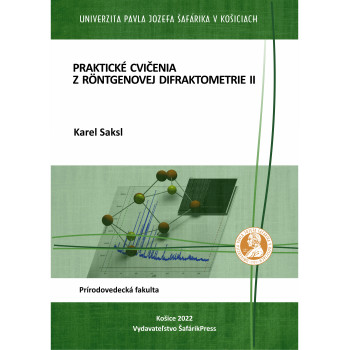
Praktické cvičenia z röntgenovej difraktometrie II

Praktické cvičenia z röntgenovej difraktometrie II

E-book

E-book

Karel Saksl

Solving crystal structures is the royal discipline of X-ray crystallography. Its primary task, with the exception of defects, is to describe the atomic structure of the motif that, by its repetition, fills the volume of the entire crystal or crystalline phase. This task is nowadays more or less routine for single-crystal X-ray diffraction, which can locate hundreds to thousands of non-hydrogen atoms in large unit cells. However, in real practice, we often have material available only in powder form instead of single crystals. Solving the atomic structure from its X-ray diffraction data is non-trivial, mainly because the three-dimensional diffraction space of a single crystal is reduced to one dimension by measuring a large number of randomly oriented microcrystals (crystallites). Therefore, the solution itself requires, in addition to proper measurement methodology, the selection of suitable tools, procedures, and strategies that, through optimization, will lead to the solution and refinement of the given crystalline phase. The current limit of this method is approximately 100 non-hydrogen atoms in the asymmetric part of the unit cell, which, however, is sufficient for most inorganic materials.

The goal of these educational texts is to provide students in the second and third levels of university studies with specific guidance on solving crystal structures from powder X-ray diffraction data. These scripts build upon my first monograph and require practical knowledge of its content. Similar to my previous monograph, I offer solved examples without a deep theoretical introduction, demonstrating procedures and strategies leading to the correct solution of crystalline phases using the freely available GSAS-II program. The examples are arranged from simpler to more complex, and the reader will find many useful pieces of information in the literature references as well as in the comments below the line. Part of these scripts are data intended for your individual practice of the described procedures. 

Karel Sakls

Download the e-book for free  (pdf)

Metódy prípravy nanoštruktúr I

Metódy prípravy nanoštruktúr I

E-book

E-book

Vladimír Komanický

The aim of this textbook is to acquaint students in physics, chemistry and material science on both undergraduate and graduate level, with the techniques used to prepare micro-electromechanical devices, nanoobjects and nanostructures using the so called top down methodologies. The is no requirement for this course to pass any prior courses. The introduction part of the text defines the forces that affect nanoobjects and the interactions between them. Reader can understand in detail why properties of nanomaterials and nanostructures are so different when comprared to their macroscopic counterparts. Text gives also an overview of thin film preparation technologies as precursors for the preparation of nanostructures. The main emphasis in Volume I is on conventional lithographic technologies for the preparation and shaping of nanostructures, methods for characterization of thin films, nanoparticles and nanomaterials. Unconventional lithographic methods will also be discussed in the prepared upcoming Volume II. Student will also get acquainted with the applications of nanostructures in research focused on nanophysics, nanocatalysis and nanoelectronics. The textbook is used as a study material for the course ÚFV / MPN / 14 - Methods of preparation and characterization of nanostructures. Part of the course is also a laboratory exercise in which the student gets acquainted with the techiques used for the preparation and characterization of thin films and top-down technologies used for the preparation of nanostructures.

Download the e-book for free (pdf)

Cvičenia z biochémie mikroorganizmov

Cvičenia z biochémie mikroorganizmov

E-book

E-book

Mária Kožurková

These university textbooks are intended for first-year master's degree students at the Faculty of Natural Sciences of UPJŠ in Košice. The scope and content of the works included in these scripts are primarily based on time and spatial constraints, taking into account the material demands of the tasks.

The aim of these scripts is to teach students basic microbiological techniques and to show them the importance of microorganisms in everyday life and their crucial role in nature. The exercises are designed to enhance students' technical skills and teach them to work according to safety principles.

The text is divided into 13 parts. Each part begins with an introduction to the theory related to the practice topic. The appendix includes a proposal for the preparation of protocols for individual exercises.

Download the e-book for free (pdf)

Vybrané kapitoly z koloidnej chémie

Vybrané kapitoly z koloidnej chémie

E-book

E-book

Daniela Kladeková

Working with this study text requires adequate knowledge of physical chemistry, physics, and biology, as navigating the presented material becomes challenging without this foundation. A solid grasp of mathematics is essential and aids in understanding colloidal chemistry problems. The textbook, structured into individual chapters, first addresses optical and molecular-kinetic properties after classifying and characterizing disperse systems.

This university-level textbook is primarily intended for students in chemical and ecological disciplines at the Faculty of Science, Pavol Jozef Šafárik University in Košice. It does not aim to exhaustively cover every detail of the subject, as comprehensive treatments are already available in specialized monographs on colloid and macromolecular chemistry, as well as in foundational physical chemistry textbooks.

Download the e-book for free (pdf)

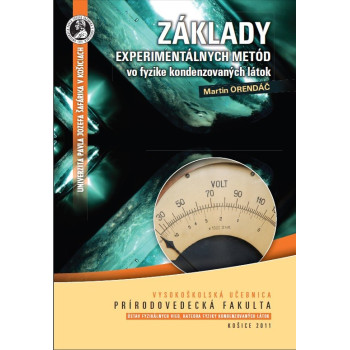
Základy experimentálnych metód vo fyzike kondenzovaných látok

Základy experimentálnych metód vo fyzike...

E-book

E-book

Martin Orendáč

The textbook is designed to prepare students who will engage in the experimental study of the properties of condensed matter. It demonstrates that a contemporary experimental physicist must not only possess sufficiently detailed knowledge of the physical processes occurring within the object under study but also understand the methods for creating the experimental conditions in which the experiment is conducted. Active knowledge of the functioning of the entire experimental setup can be of fundamental importance in the implementation or potential modification of the measurement methodology used.

Download the e-book for free (pdf)

Jadrová chémia

Jadrová chémia

E-book

E-book

Andrea Morovská Turoňová

The discovery of radioactivity at the turn of the 19th and 20th centuries stimulated the rapid development of nuclear sciences. At the interface between nuclear physics and chemistry, disciplines such as radiochemistry, radiation chemistry and nuclear chemistry were formed.

The aim of the Nuclear Chemistry course which is taught at the PF UPJŠ is to provide basic knowledge, with an emphasis on the general value of the subject. It is important to make available the basics of various methods, techniques and their specifics in the application of nuclear phenomena in chemistry and related fields. Emphasis is also placed on the use of correct terminology, knowledge of the context of relationships and basic principles, supplemented by illustrative concrete cases.

The choice of material is rather difficult, but we count on additional monographs and textbooks to fill in the gaps of these teaching texts.

Download the e-book for free (pdf)

Ecology I (General Ecology)
  • On sale!
  • -€10.35

Ecology I (General Ecology)

€11.35 €1.00 -€10.35
Availability: 70 In Stock

Igor HudecĽubomír Kováč 

The study course provides the basic knowledge on the fundamental parameters, relationships and processes in ecological sciences. Brief content: ecological factors and relations to environment (air, water, soil); influence of ecological factors upon organisms (morphological adaptations, behavioural responses); populations and communities (external and internal parameters of populations, population dynamics); ecosystems (impact assessment) and biomes (basic features and human impact); cycles (hydrologic, gaseous, sedimentation) of basic elements on Earth.  

Authors

This website uses cookies to ensure you get the best experience on our website