Filter By

Categories

Categories

Year of publication:

Year of publication:

Publication language:

Publication language:

Faculty:

Faculty:

UPJŠ Unit

UPJŠ Unit

Method of publication:

Method of publication:

Active filters

  • Categories: Science
  • Year of publication:: 2010
  • Year of publication:: 2010
  • Year of publication:: 2012
  • Year of publication:: 2018
  • Year of publication:: 2018
  • Year of publication:: 2018
  • Year of publication:: 2018
  • Year of publication:: 2022
  • Year of publication:: 2022
  • Publication language:: Slovak
Jarná škola doktorandov 2022

Jarná škola doktorandov 2022

E-book

E-book

Peter Fedoročko (eds.)

From June 14 to June 17, 2022, the 8th annual Spring School for Doctoral Students at Pavol Jozef Šafárik University in Košice will take place in Liptovský Ján. The scientific program of the spring school will comprise 3 plenary lectures by leading scientific experts and 1 workshop. Doctoral students will present their research papers in two sections: 22 doctoral students of Faculty of Public Administration, Faculty of Law and Faculty of Arts, and 26 doctoral students of Faculty of Medicine and Faculty of Science. The scientific programme of the spring school will also include a panel discussion with the management of Pavol Jozef Šafárik University in Košice.

Download the e-book for free (pdf)

Pokročilé elektrochemické metódy

Pokročilé elektrochemické metódy

E-book

E-book

Ivana Šišoláková - Radka Gorejová - Jana Shepa - Renáta Oriňaková

The university textbook "Advanced Electrochemical Methods" is a teaching aid intended for master's or doctoral students studying electrochemical subjects at the Department of Physical Chemistry, Faculty of Science, Pavol Jozef Šafárik University in Košice.

These textbooks follow and further develop textbooks focused on the basic electrochemical methods currently used in modern research. The presented teaching texts are processed in sixteen clear chapters, where they provide a theoretical principle and derivation of electrochemical processes and mechanisms in individual methods. Teaching texts also consist of practical laboratory exercises, in which students can try out the real application of the studied electrochemical methods.

The practical tasks are focused primarily on the demonstration of research that is carried out at our workplace. Students will be able to try, for example, electrochemical modification of the electrode surface, preparation of electrochemical sensors for the determination of analytes, preparation and characterization of a dye-sensitized solar cell or electrochemical evolution of hydrogen.

Download the e-book for free (pdf)

A guide to the didactics of biology

A guide to the didactics of biology

E-book

E-book

Katarína Kimáková

The textbook is intended for university students who are preparing for the profession of biology teacher. The structure of the book is similar to an encyclopedia, with one page devoted to each content item, but the topics of the chapters and subchapters follow each other.

The explanatory text on the page illustrates the diagram and there are notes and links to other sources of information. For better orientation, the content of the textbook is divided into 8 sections, which cover several chapters. It follows the general didactics, which it connects with the teaching of biological content. The book provides a basic orientation in the approaches to learning this subject, and also explains the relationship between biology as a science and the didactics of biology. It deals with teaching standards and curricula, advises on how to master biological concepts and understanding, how to communicate with students in biology classes, when and why are effective visual and practical methods. It acquaints the reader with the issue of setting goals for biological education in the cognitive, psychomotor and affective areas in relation to formative and summative assessment.

Hopeful as well as experienced teachers will find in this publication not only a look into the history of teaching biology, but also a look into the future. Current trends in biology teaching, the connection of teaching with digital technologies, the virtual learning environment and interactive simulations and models belong to science lessons today.

Download the e-book for free (pdf)

ATÓMOVÁ ŠTRUKTÚRA LÁTOK I - Základy RTG kryštalografie

ATÓMOVÁ ŠTRUKTÚRA LÁTOK I - Základy RTG...

E-book

E-book

Jozef Bednarčík

Crystallography deals with discerning the arrangement and bonding of atoms in crystalline solids. Almost immediately after their discovery, X-rays began to be used to study the internal structure of substances.

The first chapter of this textbook deals with the basic concepts of crystallography. At the beginning, crystalline solids are characterized. In the next section, the basic types of bonds and their characteristics are briefly presented. The main subject of this chapter is the interpretation of basic concepts such as symmetry operations, translational periodicity, grid, elementary cell. Spatial lattices and crystal systems are presented. At the end of this chapter, attention is paid to the description of individual types of defects in crystal structures. In the second chapter, the Bohr model of the hydrogen atom is presented. Individual quantum numbers and their meaning are given.

Next, energy levels and allowed transitions within an atom with multiple electrons are described. The second chapter concludes with the characterization of the basic absorption and emission processes. The third chapter is devoted to the production of X-ray radiation and its properties. Sources of X-ray radiation and a description of their operation are presented.

Interaction of X-ray radiation with matter, absorption and detection of X-ray radiation are the subject of the last part of this chapter.

Download the e-book for free (pdf)

Počítačová fyzika II

Počítačová fyzika II

E-book

E-book

Milan Žukovič

This textbook is intended for master's degree students and is a follow-up to the Computational Physics I course studied at the bachelor's level. The content of the textbook Computational Physics II focuses on stochastic methods of solving physical problems, mainly on Monte Carlo (MC) simulation of many-particle systems.

The focus on this computationally intensive approach is motivated by the gradual increase in the computing capacities of ordinary computers as well as the introduction of high-performance computing clusters. This has led to significant progress in the development of new simulation techniques, thanks to which MC simulations have found application in various areas of research and application practice. Considering the main research focus of the department, this text is particularly devoted to the presentation of basic and more advanced MC simulation techniques applied to a simple Ising spin model in order to investigate its magnetic, thermodynamic and critical properties.

The next part is devoted to MC simulations of random processes. It focuses on the simplest but also the most basic random walk process and demonstrates its applications in financial analysis and the solution of a quantum system described by the time-dependent Schrödinger equation. The last part is dedicated to the basics of molecular dynamics, applied to simulating the classical movement of atoms in a given force field. By mastering the problems addressed in this course, students will obtain a potential tool for working out of their diploma theses, or a methodology useful for their further scientific and research practice in the field of investigating of complex systems.

The lectured topic is subsequently exercised in the form of preparing projects implemented in the freely distributable software Octave, which is easy on the user's programming skills and which students have the opportunity to familiarize themselves with in the previous study.

Download e-book for free (pdf)

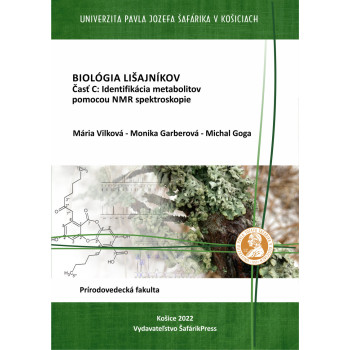
BIOLÓGIA LIŠAJNÍKOV. Časť C: Identifikácia metabolitov pomocou NMR spektroskopie

BIOLÓGIA LIŠAJNÍKOV. Časť C: Identifikácia...

E-book

E-book

Mária VilkováMonika GarberováMichal Goga

Nuclear Magnetic Resonance (NMR) is currently a widely used analytical tool that finds application in many fields of science and technology. The broadening of its practical use brings with it the necessity to create educational texts appropriate to the given scientific discipline.

This university textbook is intended for students of biology and serves as a supplement to the study materials for the advanced master's course "Biology of Lichens." At the same time, it represents a useful resource for master's and doctoral students involved in research, helping them interpret NMR spectra and present basic theoretical concepts.

The textbook briefly describes the important aspects of each NMR spectroscopic technique without delving excessively into the physical principles of individual methods or complex mathematical analyses. In this edition, the structures of lichen metabolites have been included, which students will isolate, purify, and identify using various analytical methods during practical exercises. An entire chapter is dedicated to a detailed description of solving the NMR spectra of isolated metabolites, with each step in elucidating the structures of both known and unknown metabolites explained in detail. The solved tasks are followed by numerous unsolved examples, including high-resolution 1D and 2D NMR spectra of metabolites, intended to further develop the acquired knowledge and skills of students and doctoral candidates in structure elucidation using NMR spectroscopy.

Download e-book for free (pdf)

Geopriestorové technológie v bádateľsky orientovanom vyučovaní geografie

Geopriestorové technológie v bádateľsky...

E-book

E-book

Stela Csachová - Ján Kaňuk - Alena GessertLadislav NovotnýŠtefan GáborJozef Šupinský

This book addressed the inquiry-based learning and teaching with the support of geospatial technologies. Today, geospatial technologies are influencing geography teaching learning, particularly in secondary education. Theoretical framework gives the reader the insight to inquiry-based learning, with special focus on inquiry in geography. The one-by-one step of inquiry is analysed in detail. The major part of the book presents the eleven models of geography lessons, representing the subject content of physical, human and regional geographies, various levels of inquiry and use of different geospatial technologies. The readers are acquainted with the use of geographic information system (particularly Google Earth and ArcGIS online), web portals, webGIS, open data, mobile applications and new forms of 3D cartographic visualisation (virtual reality, 3D print, dynamic 3D map) in teaching geography. The lesson models were tested with the students to be geography teachers in school year 2021/2022. This books serves as resource mainly for undergraduate teacher students and in-service geography teachers.

Download e-book for free (pdf)

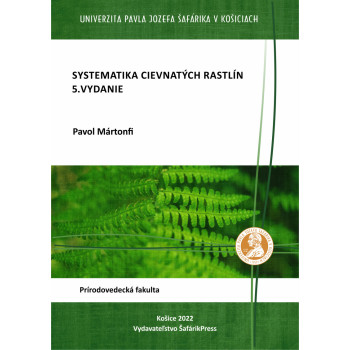
Systematika cievnatých rastlín, 5. vydanie

Systematika cievnatých rastlín, 5. vydanie

E-book

E-book

Pavol Mártonfi

The university textbook deals with the latest knowledge from the systematics of vascular plants in a clear manner. Vascular plants arose in the Silurian period in the Paleozoic, when the first primitive plants moved from water to dry land, which required evolutionary progress in the morphological and anatomical structure of these plants. During about 420 million years of the existence of vascular plants, several of their main groups have evolved: the spore vascular plants, including the lycopods (branch Lycopodiophyta) and group of ferns and related plants (branch Monilophyta), and the seed plants, including gymnosperms (branch Gymnospermae) and angiosperms ( Angiospermae), which currently dominate among plants. The textbook provides a brief but comprehensive overview of the main groups, orders and families of plants with their description, distribution, main representatives, while also addressing the useful properties of selected species. The work is complemented by an overview of the system of plants by Cronquist, Tachtadžjan, APG and an overview of the families of the Slovak flora, as well as a taxonomic index.

Download e-book for free (pdf)

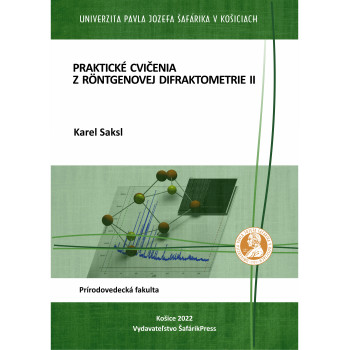
Praktické cvičenia z röntgenovej difraktometrie II

Praktické cvičenia z röntgenovej difraktometrie II

E-book

E-book

Karel Saksl

Solving crystal structures is the royal discipline of X-ray crystallography. Its primary task, with the exception of defects, is to describe the atomic structure of the motif that, by its repetition, fills the volume of the entire crystal or crystalline phase. This task is nowadays more or less routine for single-crystal X-ray diffraction, which can locate hundreds to thousands of non-hydrogen atoms in large unit cells. However, in real practice, we often have material available only in powder form instead of single crystals. Solving the atomic structure from its X-ray diffraction data is non-trivial, mainly because the three-dimensional diffraction space of a single crystal is reduced to one dimension by measuring a large number of randomly oriented microcrystals (crystallites). Therefore, the solution itself requires, in addition to proper measurement methodology, the selection of suitable tools, procedures, and strategies that, through optimization, will lead to the solution and refinement of the given crystalline phase. The current limit of this method is approximately 100 non-hydrogen atoms in the asymmetric part of the unit cell, which, however, is sufficient for most inorganic materials.

The goal of these educational texts is to provide students in the second and third levels of university studies with specific guidance on solving crystal structures from powder X-ray diffraction data. These scripts build upon my first monograph and require practical knowledge of its content. Similar to my previous monograph, I offer solved examples without a deep theoretical introduction, demonstrating procedures and strategies leading to the correct solution of crystalline phases using the freely available GSAS-II program. The examples are arranged from simpler to more complex, and the reader will find many useful pieces of information in the literature references as well as in the comments below the line. Part of these scripts are data intended for your individual practice of the described procedures. 

Karel Sakls

Download the e-book for free  (pdf)

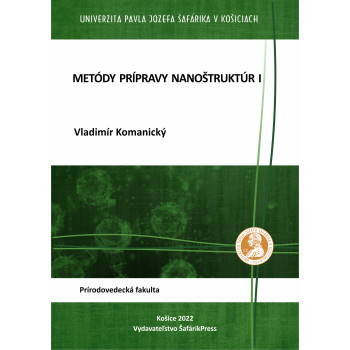
Metódy prípravy nanoštruktúr I

Metódy prípravy nanoštruktúr I

E-book

E-book

Vladimír Komanický

The aim of this textbook is to acquaint students in physics, chemistry and material science on both undergraduate and graduate level, with the techniques used to prepare micro-electromechanical devices, nanoobjects and nanostructures using the so called top down methodologies. The is no requirement for this course to pass any prior courses. The introduction part of the text defines the forces that affect nanoobjects and the interactions between them. Reader can understand in detail why properties of nanomaterials and nanostructures are so different when comprared to their macroscopic counterparts. Text gives also an overview of thin film preparation technologies as precursors for the preparation of nanostructures. The main emphasis in Volume I is on conventional lithographic technologies for the preparation and shaping of nanostructures, methods for characterization of thin films, nanoparticles and nanomaterials. Unconventional lithographic methods will also be discussed in the prepared upcoming Volume II. Student will also get acquainted with the applications of nanostructures in research focused on nanophysics, nanocatalysis and nanoelectronics. The textbook is used as a study material for the course ÚFV / MPN / 14 - Methods of preparation and characterization of nanostructures. Part of the course is also a laboratory exercise in which the student gets acquainted with the techiques used for the preparation and characterization of thin films and top-down technologies used for the preparation of nanostructures.

Download the e-book for free (pdf)

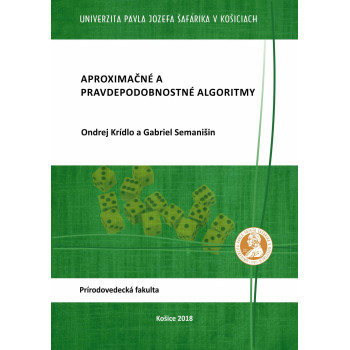
Aproximačné a pravdepodobnostné algoritmy

Aproximačné a pravdepodobnostné algoritmy

E-book

E-book

Ondrej KrídloGabriel Semanišin

For computer scientists, the constant challenge is to seek efficient algorithms and various technical and implementation possibilities to improve the computational complexity of currently known algorithms. Partial solutions are offered by approaches such as grid-based methods and parallelization of computation. Quantum computers represent a significant but still unfulfilled promise. From a theoretical perspective, probabilistic and approximation approaches provide very effective solutions, and these are the methods we aim to explore in detail.

These electronic university textbooks serve as supplementary materials for the course Approximation and Probabilistic Algorithms. They were developed from the authors' materials and contributions by Prof. RNDr. Viliam Geffert, DrSc., whom the authors thank for providing the manuscript. Acknowledgments also extend to RNDr. Ján Katrenič, PhD., who prepared the first set of exercises for the course, and Žaneta Semanišinová, who reviewed large portions of the text and contributed suggestions for its improvement.

Download the e-book for free (pdf)

Študentská vedecká konferencia PF UPJŠ 2018

Študentská vedecká konferencia PF UPJŠ 2018

E-book

E-book

Katarína Cechlárová (ed.)

In 2018, the Student Scientific Conference was held on April 18, 2018, in 16 sections covering biology and ecology, chemistry, physics, geography, mathematics, computer science, and their subject didactics. There were 110 registered contributions from bachelor's and master's students. Additionally, eight high school students participated outside of the competition; these students already visit our alma mater at a young age, work in our laboratories, and prepare for further studies under the guidance of our enthusiastic teachers. The day also included a programming competition and the IHRA competition in three categories, where students from PF UPJŠ competed alongside pupils from elementary and secondary schools.

The abstracts of the Student Scientific Conference contributions convincingly demonstrate that PF UPJŠ students study their field not only theoretically but also actively engage in solving partial scientific problems that are part of the research goals at PF UPJŠ institutes. This collection provides an overview of scientific activity at the faculty, which we believe will be interesting for the broader public as well.

Download the e-book for free  (pdf)

Študentská vedecká konferencia PF UPJŠ 2017

Študentská vedecká konferencia PF UPJŠ 2017

E-book

E-book

Katarína CechlárováEva Pitoňáková (eds.)

Proceedings of Abstracts from Contributions by Participants of the Student Scientific Conference at the Faculty of Science, UPJŠ in Košice, Held on April 26, 2017

This is the fifth edition of the proceedings from the Student Scientific Conference (ŠVK) at the Faculty of Science, Pavol Jozef Šafárik University in Košice. We are pleased that ŠVK has become an integral part of faculty life and a showcase for the quality of education provided. In 2017, ŠVK took place as part of the traditional Science Days on April 26, 2017. 105 students from the Faculty of Science presented their work. Contributions were organized into 15 sections, supplemented by an open programming competition involving 17 students and the final round of the IHRA competition, which included 27 teams from across Slovakia.

The abstracts in this proceedings demonstrate that students at the Faculty of Science, UPJŠ, acquire knowledge and skills in their field not only through theoretical study of disciplines but also through active engagement in solving partial scientific problems aligned with research goals at the faculty’s institutes. These abstracts also provide an overview of the faculty’s scientific activity, which we believe will be of interest to the broader public.

doc. RNDr. Gabriel Semanišin, PhD.

Dean of the Faculty

Download the e-book for free (pdf)

Prehľad dejín biológie, lekárstva a farmácie

Prehľad dejín biológie, lekárstva a farmácie

E-book

E-book

Martin BačkorMiriam Bačkorová

The proposed text focuses on the history of studying biology, medicine, and pharmacy as scientific disciplines from prehistoric times through antiquity, the Middle Ages, and the modern era. The text chronologically organizes the most significant figures in the history of biological scientific disciplines, outlines key characteristics of major historical discoveries, and reevaluates their significance from the perspective of 21st-century science.

The educational text is chronologically divided into the most significant periods of civilization development. The last two completed centuries—the 19th and 20th—are subdivided into major life science fields due to the unprecedented growth of biological disciplines and the resulting volume of acquired information.

Since it can sometimes be challenging in science to define what constitutes the past versus the present of a particular discipline, we have excluded significant biological discoveries from the early 21st century, which are typically regarded as the “present” of biology.

Download the e-book for free (pdf)

Lekárska chémia -  Návody a protokoly na praktické cvičenia

Lekárska chémia - Návody a protokoly na...

E-book

E-book

Marek Stupák et al.

A well-known proverb says: "It is better to see once than to hear a hundred times." With this in mind, the electronic version of the teaching materials has been designed, as we are convinced that practical laboratory experience is irreplaceable and still holds its significance in university studies.

In the provided teaching texts, you will find a set of experiments that complement and help better understand the theoretical knowledge gained through self-study as well as lectures in an appropriate manner. Additionally, this e-version allows students, after printing and subsequently completing individual tables, observations, and conclusions, to submit them as a laboratory report that confirms they have successfully mastered the assigned tasks.

Download the e-book for free (pdf)

Návody na praktické cvičenia z biotechnológie

Návody na praktické cvičenia z biotechnológie

E-book

E-book

Danica Sabolová

This university textbook is intended for students of the Faculty of Science of the University of Applied Sciences in Košice who have enrolled in practical exercises in Biotechnology, but also for all other students who are interested in learning about the practical applications of biotechnology.

The aim of the practical course is to familiarize students with basic biotechnological methods and their applications. The students will verify in practice the theoretical knowledge acquired in the Biotechnology lectures such as the course of fermentation processes, wine production, preparation of fermented milk products and cheese, preparation of culture media, inoculation and cultivation of microorganisms, etc. The practical exercises also include the use of analytical and spectral methods, which are an integral part of biochemistry.

The scripts are published only in electronic form and are available on the University's website: http://kosice.upjs.sk/~kbch/sk, for the reason that it will always be possible to update and modernize the content of the laboratory exercises.

Download the e-book for free (pdf)

Vybrané experimentálne úlohy z koloidiky

Vybrané experimentálne úlohy z koloidiky

E-book

E-book

Daniela Kladeková

This university text is intended for students of chemical and ecological sciences at the Faculty of Natural Sciences of the P. J. Šafárik University in Košice and is intended to serve as a tool for experimental exercises in colloid chemistry. Colloid chemistry is an important part of the theoretical basis of the chemical sciences and belongs to the newer interdisciplinary fields of natural sciences.

It combines knowledge from physical chemistry, physics and biology, while also drawing on a solid knowledge of mathematics and other scientific disciplines. Experiments are often essential in understanding the problems of colloid chemistry, modelling ideas about the phenomena and laws involved in the discipline. This is why active participation in experimental exercises is so important and essential to mastering the material in colloid chemistry.

In selecting the tasks for these scripts, it was also necessary to respect the considerable limitations imposed by the possibilities of the laboratory instrumentation and material equipment of our department. Despite this limitation, however, they can illustrate to students the basic theoretical physicochemical principles of colloid dispersion systems and, importantly, their understanding can contribute to the understanding of some of the more important peculiarities of colloidal phenomena.

Download the e-book for free (pdf)

Základné fyzikálne praktikum III.

Základné fyzikálne praktikum III.

E-book

E-book

Janka Vrláková - Stanislav Vokál

Atomic and nuclear physics are relatively young scientific disciplines forming the final part of the general physics course at the Faculty of Physics of the Jagiellonian University. Their aim is to explain the nature of the basic physical properties of atoms, atomic nucleus and elementary particles.

This is also the content of the lectures and exercises ‘General Physics IV’ in the 2nd year of the Bachelor's degree in Physics at the Faculty of Natural Sciences (PF) of the P.J. Šafárik University (UPJŠ) in Košice. They are followed by optional lectures ‘Nuclear Radiation in the Environment’, ‘Introduction to the Physics of the Microworld’ in the 3rd year of the Bachelor's degree of single-discipline study of physics, or teacher study of physics in combination with another subject, and ‘Subnuclear Physics’ in the 1st year of the Master's degree of teacher study of physics in combination with another subject.

In the aforementioned lectures, the latest experimental findings on the structure and behaviour of the microworld are presented by means of physical theories and their subsequent experimental verification in experiments.

Download the e-book for free (pdf)

Matematická analýza 1

Matematická analýza 1

E-book

E-book

Božena Mihalíková - Ján Ohriska

This text is intended for first-year students in 76-12-8 ‘General Education Teaching’ in combinations with mathematics. It is based on the authors' lectures and their more than ten years of experience in teaching this subject at the Faculty of Education of the University of Applied Sciences. When writing it, the authors tried to take into account the specificity of mathematics teaching studies.

The present teaching text was not written due to the lack of textbooks on mathematical analysis. The reason for writing it was the authors' findings that the students do not have sufficient experience in working with specialized literature from secondary school, the difficulties for many of them (especially in the first semesters) are caused by even a slightly different interpretation, not rarely also by a change in labeling, which makes them miss the essence of the studied problem. The authors of the text did not set out to be original. Their aim was to make such a selection of topics as is necessary for a future teacher of mathematics and to choose such a method of interpretation which, in their opinion, is suitable for first-year students.

A good mastery of the curriculum (expansion of the mathematical apparatus and the related possibilities of applying other methods of proof as well as the acquisition of the necessary numerical skills) presupposes the use of other literary sources (textbooks, collections of problems) according to the teacher's recommendation.

Download the e-book for free (pdf)

Príjem a transport minerálnych látok v rastlinách

Príjem a transport minerálnych látok v rastlinách

E-book

E-book

Peter Paľove-Balang

The text ‘Uptake and transport of mineral substances in plants’ in Slovak language provides a general overview of the uptake and distribution of substances in an easy-to-understand form.

The individual chapters introduce students to the properties of the soil environment, which have a significant influence on the availability of substances, as well as the transport of substances across membranes and over medium and long distances. The text contains the latest findings from the English literature, supplemented by diagrams and graphs created by the author on the basis of his own research or by compiling several sources.

The text is intended primarily for students of a master's degree in biology or ecology and assumes at least a basic knowledge of plant physiology.

Download the e-book for free (pdf)

Stresová fyziológia rastlín - Návody na cvičenia

Stresová fyziológia rastlín - Návody na cvičenia

E-book

E-book

Jozef Kováčik

These "Exercise Manuals" present a concise overview of commonly used methodologies as well as progressive techniques, such as the use of liquid chromatography and fluorescence microscopy. Individual tasks were selected based on the research focus of the Department of Botany at the Faculty of Science, Pavol Jozef Šafárik University in Košice, particularly in the context of "stress physiology."

Some tasks can also be utilized within the subject "Plant Ecology." Chamomile (Matricaria chamomilla) is typically used as a model plant for individual tasks due to its long-standing history of research at the Department of Botany and its ease of cultivation under laboratory conditions. The chapters also briefly discuss the significance of monitored parameters, principles of their determination, and metabolism (formation or degradation), aiming to indicate their mutual context.

This approach highlights that determining an individual parameter cannot provide a general explanation for the overall causes and impacts of observed changes; however, it can serve as a basis for testing hypotheses at the level of other parameters.

For deeper study of specific issues, there is an abundance of high-quality international monographs and review articles available.

Download the e-book for free (pdf)

Určitý integrál

Určitý integrál

E-book

E-book

Ondrej Hutník

The concept of the integral is one of the most significant concepts in mathematics as a whole. In its most primitive form, it was already used by the ancient Greeks in the creation of Euclidean geometry. However, it was only after Descartes' work on analytical geometry in 1637 that mathematicians could begin to consider the integral as a subject of analysis. Descartes' work laid the groundwork for the discovery of infinitesimal calculus by Leibniz and Newton around 1665. At that time, a great dispute arose over the priority of this discovery, dividing scholars of Germany and England into two opposing camps, each favoring their own champion. Today, we know that Newton's work on fluxions and fluents was somewhat earlier, but Leibniz's notation and approach have gained more acceptance in the mathematical world, and the symbols ∫ ∫ and d d are still used today. A brief overview of the history of the integral will be presented in Chapter 1.

Today, there is a plethora of scripts, textbooks, and books dedicated to explaining the concept of the integral. Therefore, every potential author faces the initial question of whether to write another text on this topic. Our affirmative answer to this question was driven by the students' request to find the subject matter of a part of the winter semester of the second year presented in a coherent form. The second motivation is a slightly different approach to the topic. If we consider the methods typically used in solving problems and gaining routine with a certain integral, it mainly involves the Newton-Leibniz formula, and often there is little time left to compute the definite (Riemann) integral using its definition. Therefore, we included a discussion of the Newton integral in Chapter 2, which reflects this fact and is directly related to the indefinite integral, whose various calculation methods receive relatively much attention in the previous semester. Only after that, in Chapter 3, do we build the theory of the Riemann integral, present criteria for its existence, classes of integrable functions, basic properties, and finally its relationship with the Newton integral. Questions primarily concerning geometric applications are addressed in Chapter 4, and in the final chapter, we focus on extending the Riemann integral to unbounded functions and unbounded intervals.

Download the e-book for free (pdf)

Geografické poznatky bez hraníc - výber z maďarských a slovenských príspevkov z fyzickej a humánnej geografie.

Geografické poznatky bez hraníc - výber z...

E-book

E-book

Dušan Barabas a kol.

The presented text is the final product of work within the project "Tanuljunk egymástól!/Let’s Learn from Each Other!" The project emerged from long-standing contacts between the staff of the Centre for Regional Studies of the Hungarian Academy of Sciences and the Institute of Geography at the Faculty of Science, Pavol Jozef Šafárik University in Košice, as a natural effort to expand mutual cooperation. The first step was collaboration within Interreg II projects, involving a broad range of institutions from both academic and non-academic environments. This initial attempt was unsuccessful due to administrative errors. Consequently, a project titled HUSK/0801/1.6.1/0003 "Tanuljunk egymástól!/Let’s Learn from Each Other!" was prepared and developed in agreement with the Hungarian side. It was approved and co-financed by the European Regional Development Fund under the Hungary-Slovakia Cross-Border Cooperation Program 2007–2013.

Download the e-book for free (pdf)

Malý atlas liečivých rastlín

Malý atlas liečivých rastlín

€15.00
Availability: 2 In Stock

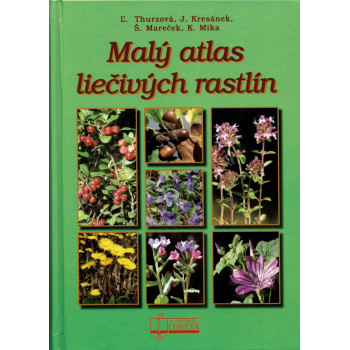
Ľ. Thurzová - J. Kresánek - Š. Mareček - K. Mika

Predchádzajúce vydanie Malého atlasu liečivých rastlín, okrem desiatok zahraničných vydaní, bolo roku 1983. Základ tohto záslužného diela ostal nezmenený. V biochemickom a vo farmakodynamickom výskume sa však za posledné roky udiali závažné zmeny, ktoré skorigovali niektoré zaužívané dogmy. Tieto zmeny bolo treba rešpektovať vo fytoterapeutickej aplikácii.
V minulosti veľmi populárna a obľúbená publikácia chce opäť poskytnúť užitočné vedomosti všetkým, ktorí sa zaujímajú o fytoterapiu, aspoň z najfrekventovanejších druhov liečivých rastlín.

Cytológia pracovný zošit na praktické cvičenia

Cytológia pracovný zošit na praktické cvičenia

€10.50
Availability: 34 In Stock

Ján Kleban a kolektív

Predkladaný pracovný zošit na praktické cvičenia z cytológie je určený poslucháčom 1. ročníka bakalárskeho štúdia biológie a 1. ročníka bakalárskeho medziodborového štúdia v kombinácii s biológiou na Prírodovedeckej fakulte Univerzity Pavla Jozefa Šafárika v Košiciach. Slúži ako návod, ktorý má študentom uľahčiť prácu a umožniť rýchlejšiu orientáciu v zadanej úlohe. Úprava pracovného zošita do formy protokolov umožňuje študentom zakresliť vlastné pozorovanie a tým stimuluje študentov k presnejšiemu a trvalejšiemu zapamätaniu si precvičovanej úlohy a zároveň umožňuje spätnú kontrolu pedagógom. Počas cvičení sa študenti postupne oboznámia so základnými pojmami optiky, s aplikáciami využívajúcimi mikroskopickú techniku, ale aj so základnými rozdielmi medzi štruktúrou rastlinnej a živočíšnej bunky a ich organelami.

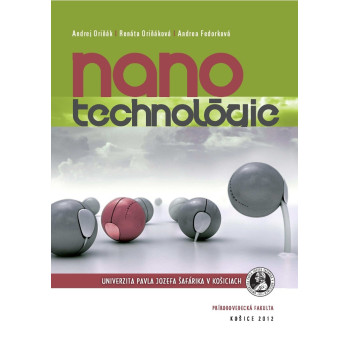
Nanotechnology

Nanotechnology

€17.68
Availability: 58 In Stock

 Andrej Oriňak - Renáta Oriňaková - Andrea Fedorková

Nanotechnology represent the fastest developing science in the present. They are based on the technologies that enable the matter manipulation at atomic level. Nanotechnology offer prepartion of the new materials with unknown and very specific properties and functions.Recent nanotechnology still stay in formative phase of their development. But more and more they are visible with nano-specific phenomenons in the fundamental control of the properties as well mater behaviour. This is quite possible that without nanotechnology will not work any science to the future, moreover that science will not exist anymore. Nanotechnolgy will give a chance and force to transform world to more environmental and comfortable. Expected is expansion of the nanotechnolgy to molecular nanosystems – heterogenous nets, in which molecules and supramolecules work as the nanodevices. The computers and robots will be reduced to the small and ultrasmall dimensions. In medicine will foremost the application of nanotechnology in genetic therapy and elimination of ageing. Nanosurgery will work at molecular level, cancer cells will be identified early and filtered , then substituted with healthy and unchanged. It is necessary to inform university or high school students  about principles of nanotechnolgy, preparation of the nanostructures, functionality of them and to offer full representation about molecular systems and nanodevices; the methods of nanostructures characterization and about application in miniaturized systems. 

Authors

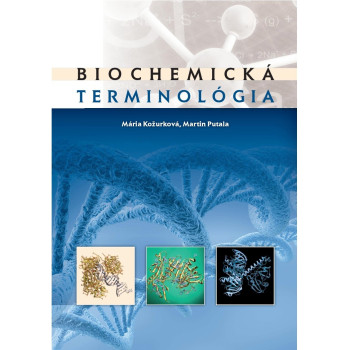
Biochemická terminológia

Biochemická terminológia

€11.60
Availability: 43 In Stock

 Mária KožurkováMartin Putala 

Cieľom tejto knihy je spracovať názvoslovné zásady a pravidlá, podľa ktorých sa tvoria slovenské názvy biochemických zlúčenín. Táto monografia je po dlhšom čase prvým pokusom o spracovanie tohto problému, a preto dúfame, že bude pomôckou a prínosom nielen pre študentov a učiteľov ale aj vedeckých pracovníkov. Poslúži aj študentom stredných škôl, ktorí majú záujem o biochémiu a molekulovú biológiu. Kniha obsahuje najnovšie názvoslovie, zásady a pravidlá pri tvorbe názvov biochemických zlúčenín. Kniha plne aplikuje odporúčania spoločnej komisie Medzinárodnej únie pre teoretickú a aplikovanú chémiu (IUPAC) a Medzinárodnej únie pre biochémiu a molekulárnu biológiu (IUBMB) so zahrnutím aktuálnych úprav názvoslovia, stereochémie a grafického znázornenia štruktúr podľa IUPAC. 

Autori

This website uses cookies to ensure you get the best experience on our website